The Best Juicers for Vegetables
Vegetable juice is three different mechanical problems. Leaves need crushing, stalks need a narrow throat, roots need torque.
By Brijon M. · Last reviewed October 17, 2026
We earn a commission if you buy through links on this page, at no extra cost to you. It does not change what we recommend or the order we rank things in. Full disclosure.
For vegetables across the board the machine we would buy is the Omega NC900HDC, because it is the only one here you can retune between a carrot and a cucumber: Omega states five adjustable pressure settings, two juicing screens, 80 RPM and a 15-year limited warranty. But the thing worth understanding before you spend anything is that "vegetables" is three mechanical problems, not one. Leaves, stalks and roots fail in three different ways, and the machine that handles one best is often mediocre at another.
The seven vegetable picks at a glance
Tap any row to jump to the full write-up, or go straight to the listing. How we score.
| # | Product | Best for | Our score | Price |
|---|---|---|---|---|
| 1 |  Omega NC900HDC Best juicer for vegetables overall | Leafy greens, wheatgrass and anyone who wants to tune extraction | 7.9/10 | |
| 2 |  Omega VSJ843 Best for leafy greens | Leafy greens and wheatgrass, where slow crushing does the work | 8.0/10 | |
| 3 |  Kuvings REVO830 Best for mixed vegetables without chopping | Celery and carrot juicers who refuse to pre-chop | 7.7/10 | |
| 4 |  Omega J8006HDS Best value for daily vegetable juice | Celery and greens on a mid-range budget | 7.9/10 | |
| 5 |  Tribest Greenstar Pro Best for hard greens and wheatgrass | Wheatgrass and hard greens, for someone who will do the washing | 7.3/10 | |
| 6 |  Nutribullet Slow Juicer Best first vegetable juicer under $200 | A first cold press juicer when the budget is firm | 7.4/10 | |
| 7 |  AMZCHEF ZM1501 Best vegetable juicer under $100 | Testing whether a daily juice habit will actually stick | 7.1/10 |
Three kinds of vegetable, three different failures
| Vegetable group | Examples | How it defeats the wrong machine | Picks here |
|---|---|---|---|
| Leaves | Kale, spinach, chard, lettuce, wheatgrass | Thin and light, so a spinning basket flings them past the blade without rupturing the cells | Omega VSJ843, Tribest Greenstar Pro, Omega NC900HDC |
| Stalks | Celery, cucumber, fennel, bok choy stems | Long fiber wraps the auger or folds in a wide chute and jams it | Omega J8006HDS, Kuvings REVO830, AMZCHEF ZM1501 |
| Roots | Carrots, beets, ginger, turmeric, sweet potato | Dense and hard, so an underpowered auger stalls and a narrow chute means ten minutes of chopping | Kuvings REVO830, Omega NC900HDC, Omega J8006HDS |
That table is the whole page in miniature, and it explains why a vegetable-first buyer should almost always ignore centrifugal machines. Leaves and stalks are the two groups a spinning basket handles worst, and they are the two groups a vegetable juicer gets fed every single day. Roots are the exception -- a centrifugal machine is genuinely good at carrots -- which is why best fruit juicers and best juicers for hard vegetables reach different conclusions from this page.
| Criterion | Omega NC900HDC | Omega VSJ843 | Kuvings REVO830 | Omega J8006HDS |
|---|---|---|---|---|
| Yield | Omega markets high juice yield and five pressure settings; no numeric yield figure is publishedManufacturer claim: Omega Juicers · checked 2026-10-02 | Not availableNot sourced | Not availableNot sourced | Omega markets high juice yield; no numeric figure is publishedManufacturer claim: Omega Juicers · checked 2026-10-02 |
| Pulp | Five adjustable pressure settings and two juicing screens, per OmegaManufacturer claim: Omega Juicers · checked 2026-10-02 | Not availableNot sourced | Not availableNot sourced | Not availableNot sourced |
| Cleanup time | Not available - no published cleanup time in minutesNot sourced | Not available - no published cleanup time in minutesNot sourced | Not available - no published cleanup time in minutesNot sourced | Not available - no published cleanup time in minutesNot sourced |
| Price | $200–400Band from retailer listings, checked 2026-10-02 | $400+Band from retailer listings, checked 2026-10-02 | $400+Band from retailer listings, checked 2026-10-02 | $200–400Band from retailer listings, checked 2026-10-02 |
| Noise | Not available | Not available | Kuvings describes the motor as noise-reduction; no decibel figure publishedManufacturer claim: Kuvings USA · checked 2026-10-02 | Not available |
| Speed | Omega states 80 RPM and 150 W outputManufacturer claim: Omega Juicers · checked 2026-10-02 | Omega states 43 RPM, dual-edge single auger, 150 WManufacturer claim: Omega Juicers · checked 2026-10-02 | Kuvings states 50 RPM, 240 WManufacturer claim: Kuvings USA · checked 2026-10-02 | Omega states 80 RPM, 200 W, triple-stage augerManufacturer claim: Omega Juicers · checked 2026-10-02 |
| Warranty | Omega states a 15-year limited warrantyManufacturer claim: Omega Juicers · checked 2026-10-02 | Omega states a 15-year limited warrantyManufacturer claim: Omega Juicers · checked 2026-10-02 | Kuvings USA states a 15-year limited warranty (regional sellers list shorter terms)Manufacturer claim: Kuvings USA · checked 2026-10-02 | Omega states a 15-year limited warrantyManufacturer claim: Omega Juicers · checked 2026-10-02 |
Why celery is the test case for a vegetable juicer
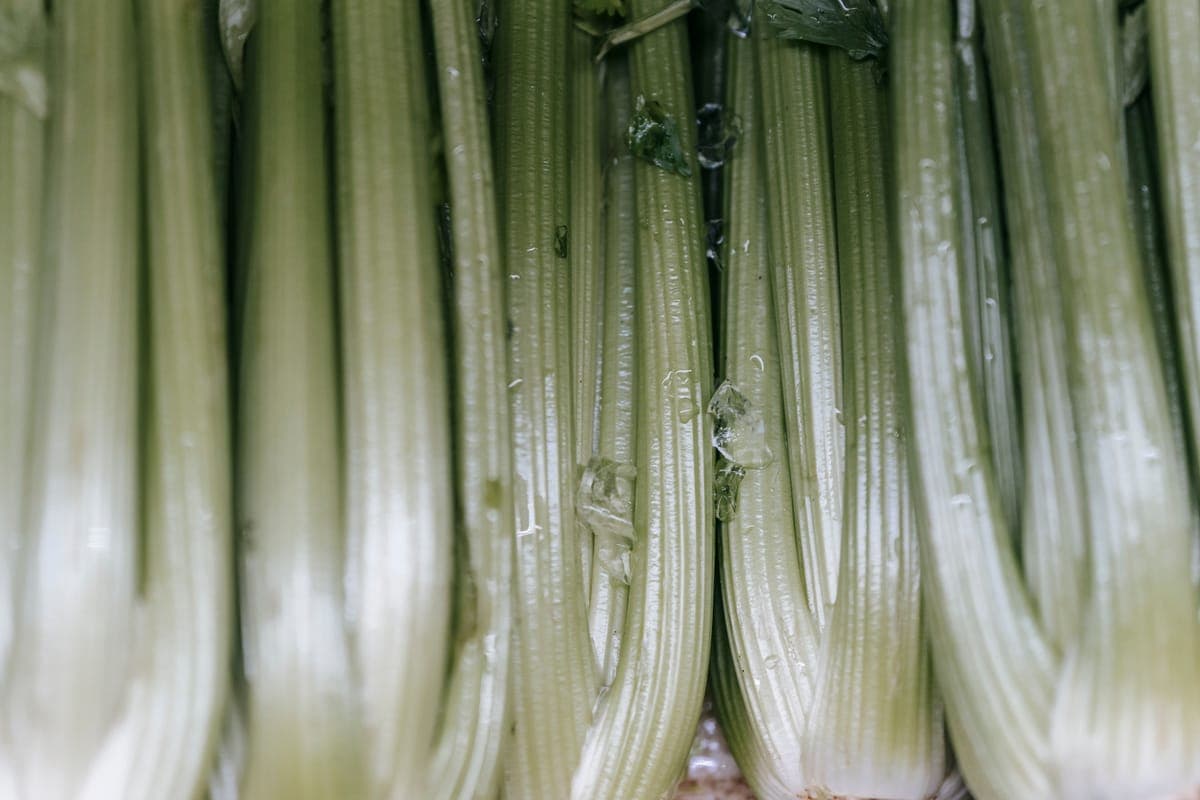
If one vegetable decides which machine you should buy, it is celery -- not because it is the most popular, but because it is the most unforgiving. A celery stalk is a bundle of long parallel fibers with the juice held between them. A flat blade spinning at 12,000 RPM, as Breville states for the JE98XL on high, travels along those fibers. An auger at 43 to 90 RPM crosses them and crushes.
The second celery problem is geometry, not speed. Feed a whole stalk into a 3.5 in chute and it folds over on itself and wedges. That is precisely what Kuvings' 1.75 in auto-cut chute is for, and why horizontal machines with narrow throats -- Omega's two, the AMZCHEF -- never have the problem in the first place. Juicer clogging fixes is the technique for either layout, and best juicers for celery is the single-produce page.
Roots are where wattage finally matters
On leaves and stalks, published wattage tells you nothing useful. On carrots, beets and a knob of ginger it tells you something real, because a dense root is the load that stalls an auger. The published figures on this page run from 130 W on the Dash up to 240 W on the Kuvings machines, with Omega at 150 W on the NC900HDC and 200 W on the J8006HDS and the Greenstar Pro.
No brand publishes a torque figure, a stall rating or a load test, so what follows is reasoning from the published numbers rather than a measurement: a lower-powered motor turning the same auger at the same speed has less margin when it is fed hard produce quickly. It does not mean a 150 W machine cannot juice carrots. It means it is less forgiving of being fed fast, which is the commonest beginner mistake. The other half of the root problem is the chute: 3.5 in on the Kuvings against 1.5 in on the Greenstar Pro is the difference between a whole beet and four pieces of beet.
Cleanup is the real cost of a vegetable habit
Vegetable juice means fibrous pulp, and fibrous pulp is what sticks in a mesh screen. A machine used for daily greens needs its screen cleaned properly, every time, and the honest position is that no brand on this page publishes a cleanup time in minutes -- so every claim about easy cleaning in this category, including the ones we quote, is marketing rather than measurement.
What is published is useful anyway. Omega's horizontals have more parts than the verticals here. Cuisinart states a mesh-free easy-clean filter on its slow juicer, and Ninja states that the removable parts are dishwasher safe -- both of which sidestep the screen problem rather than solving it. Cold press juicer cleanup is the practical routine, and easiest juicers to clean ranks everything on this site by that criterion alone.
Which of the seven, for which vegetable plan
- Mixed vegetables, and you want to tune the machine. Omega NC900HDC.
- Almost entirely leaves. Omega VSJ843 at 43 RPM, or the Greenstar Pro if wheatgrass is routine. See best juicers for leafy greens.
- Celery daily, nothing complicated. Omega J8006HDS, or the AMZCHEF ZM1501 under $100.
- A whole mixed basket and no patience for chopping. Kuvings REVO830, for the two chutes.
- Carrots and beets more than greens. Read best juicers for hard vegetables instead -- the answer changes.
- You want to find out whether you will stick with it. Nutribullet Slow Juicer or the AMZCHEF. Juicing on a budget makes that case properly.
The picks in full
1. Best juicer for vegetables overall
Omega NC900HDC
Omega NC900HDC · $200–400 · Our score 7.9/10
The one machine here you can tune to the vegetable in front of you. Omega states five adjustable end-cap pressure settings and two juicing screens at 80 RPM on 150 W, with a 15-year limited warranty. Raise the pressure for carrots and beets, drop it for cucumber and tomato, swap the screen when the mix changes -- nothing else on this page lets you move the extraction to suit the produce. Honest cons: it is 19.22 in wide at 18.7 lb and has more parts to wash than any vertical here; the chute is narrow, so roots get chopped; and Omega publishes no yield figure, only a marketed claim.
- Yield
- Omega markets high juice yield and five pressure settings; no numeric yield figure is publishedManufacturer claim: Omega Juicers · checked 2026-10-02
- Pulp
- Five adjustable pressure settings and two juicing screens, per OmegaManufacturer claim: Omega Juicers · checked 2026-10-02
- Cleanup time
- Not available - no published cleanup time in minutesNot sourced
- Speed
- Omega states 80 RPM and 150 W outputManufacturer claim: Omega Juicers · checked 2026-10-02
What works
- Five pressure settings give real control over pulp and extraction
- Handles wheatgrass, which most verticals do poorly
- 15-year warranty on a design that has been iterated for years
What does not
- 19.22 in wide, which is a counter-depth problem in small kitchens
- More parts to wash than any vertical here
- 18.7 lb, so it lives out on the counter whether you like it or not
Skip this if: Your counter is shallow, or cleanup is what will make you quit. It is over 19 in wide and there are more parts to wash than on any vertical here.
Representative photo. We have no manufacturer image library, so this is a licensed stock photo of the category, not a photo of this unit.
- Yield9/10
- Pulp9/10
- Cleanup6/10
- Value8/10
- Quiet8/10
2. Best for leafy greens
Omega VSJ843
Omega VSJ843 · $400+ · Our score 8.0/10
The slowest machine in this registry, which is exactly the point on leaves. Omega states 43 RPM and a dual-edge single auger on 150 W, with a 15-year limited warranty. Kale, chard and spinach are thin, light and full of long fiber: at 43 RPM the auger has time to fold them against the screen instead of flicking them past it. Honest cons: $400+ for a machine that does one thing superbly; Omega publishes no yield, pulp or cleanup figure for it; it is a vertical, so it needs top clearance; and roots are not what it is built for.
- Yield
- Not availableNot sourced
- Pulp
- Not availableNot sourced
- Cleanup time
- Not available - no published cleanup time in minutesNot sourced
- Speed
- Omega states 43 RPM, dual-edge single auger, 150 WManufacturer claim: Omega Juicers · checked 2026-10-02
What works
- Slowest published speed here at 43 RPM
- Juice tap lets you mix in the bowl and stops the drip
- 15-year limited warranty
What does not
- Narrow feed opening - prep is unavoidable
- Slow by design, so throughput is low
- No published yield, pulp or cleanup figure
Skip this if: You want speed in the morning. 43 RPM is deliberate and it feels deliberate when you are late for work.
Representative photo. We have no manufacturer image library, so this is a licensed stock photo of the category, not a photo of this unit.
- Yield9/10
- Pulp9/10
- Cleanup7/10
- Value6/10
- Quiet9/10
3. Best for mixed vegetables without chopping
Kuvings REVO830
Kuvings REVO830 · $400+ · Our score 7.7/10
Vegetable juice is rarely one vegetable, and this is the machine that takes a whole mixed basket. Kuvings states a 3.5 in wide chute for beets and cucumber plus a separate 1.75 in auto-cut chute for celery and carrots -- the narrow slot stops a celery stalk folding over and jamming, which is the single commonest beginner failure. 50 RPM on 240 W, and Kuvings USA states a 15-year limited warranty. Honest cons: it is tall and needs real clearance above the chute; no yield, pulp or cleanup figure is published; and it is the most expensive machine on this page.
- Yield
- Not availableNot sourced
- Pulp
- Not availableNot sourced
- Cleanup time
- Not available - no published cleanup time in minutesNot sourced
- Speed
- Kuvings states 50 RPM, 240 WManufacturer claim: Kuvings USA · checked 2026-10-02
What works
- Two chutes: whole fruit in the wide one, stringy produce in the narrow auto-cut one
- The narrow chute is the one feature aimed squarely at celery clogging
- 15-year warranty on the US listing
What does not
- Warranty length differs by region - check the seller's terms, not the brand page
- No published yield or cleanup-time figure to compare against rivals
- Top of the price range
Skip this if: Counter height is tight - this is a tall vertical machine and it needs clearance above the chute to load whole fruit.
Representative photo. We have no manufacturer image library, so this is a licensed stock photo of the category, not a photo of this unit.
- Yield9/10
- Pulp8/10
- Cleanup7/10
- Value6/10
- Quiet8/10
4. Best value for daily vegetable juice
Omega J8006HDS
Omega J8006HDS · $200–400 · Our score 7.9/10
The horizontal that most daily celery drinkers should buy. Omega states 80 RPM, 200 W and a triple-stage auger, with a 15-year limited warranty, and it feeds continuously -- so a full head of celery goes through in one run with no batch limit to hit. Honest cons: the narrow chute means knife work on carrots and beets; the horizontal layout puts more parts on the draining board; Omega markets high juice yield but publishes no numeric figure; and it is slow by design.
- Yield
- Omega markets high juice yield; no numeric figure is publishedManufacturer claim: Omega Juicers · checked 2026-10-02
- Pulp
- Not availableNot sourced
- Cleanup time
- Not available - no published cleanup time in minutesNot sourced
- Speed
- Omega states 80 RPM, 200 W, triple-stage augerManufacturer claim: Omega Juicers · checked 2026-10-02
What works
- 15-year warranty at a mid-range price
- A horizontal auger handles stringy celery and greens well
- Doubles as a nut-butter, pasta and sorbet extruder
What does not
- Narrow chute means constant prep chopping
- Takes significant counter depth
- Omega publishes no yield or cleanup figure to compare
Skip this if: You juice mostly whole apples and oranges. You will spend your life chopping to fit a narrow horizontal chute.
Representative photo. We have no manufacturer image library, so this is a licensed stock photo of the category, not a photo of this unit.
- Yield9/10
- Pulp8/10
- Cleanup6/10
- Value9/10
- Quiet8/10
5. Best for hard greens and wheatgrass
Tribest Greenstar Pro
Tribest GSE-5050 series · $400+ · Our score 7.3/10
Twin gears rather than one auger, which is the mechanism built for the toughest leaves on the list. Tribest states 110 RPM on 200 W, a 1.5 in chute opening, and a 12-year warranty for household use. If wheatgrass or hard mature kale is a routine part of the plan, this is the machine type that handles it. Honest cons: the 1.5 in chute is the narrowest here, so everything gets cut down first; twin gears mean the most parts to wash of anything on this page; it is heavy; and it is $400+.
- Yield
- Not availableNot sourced
- Pulp
- Not availableNot sourced
- Cleanup time
- Not available - no published cleanup time in minutesNot sourced
- Speed
- Tribest states 110 RPM, 200 WManufacturer claim: Tribest · checked 2026-10-02
What works
- Twin-gear trituration is the most thorough mechanism in home juicing
- Handles wheatgrass and hard greens that defeat verticals
- 12-year household warranty
What does not
- 27 lb and 18.6 in wide
- 1.5 in chute, so everything gets chopped first
- The most parts, and the most awkward parts, to clean of anything here
Skip this if: You are buying your first juicer. This is a 27 lb specialist machine with a 1.5 in chute and the heaviest cleanup of anything we cover.
Representative photo. We have no manufacturer image library, so this is a licensed stock photo of the category, not a photo of this unit.
- Yield10/10
- Pulp9/10
- Cleanup4/10
- Value6/10
- Quiet7/10
6. Best first vegetable juicer under $200
Nutribullet Slow Juicer
Nutribullet NBJ50300 · $100–200 · Our score 7.4/10
Real auger mechanics at a price that does not commit you to the habit. Nutribullet states 65 RPM, 150 W and a reverse function -- and on vegetables the reverse is not a luxury, it is how you back a wad of celery out of the auger. 17 in tall and 6.25 in wide. Honest cons: a 1-year limited warranty against fifteen on the Omegas; the 24 oz catch cup means stopping to empty on a real vegetable batch; and no published yield, pulp or cleanup figure.
- Yield
- Not availableNot sourced
- Pulp
- Not availableNot sourced
- Cleanup time
- Not available - no published cleanup time in minutesNot sourced
- Speed
- Nutribullet states 65 RPM, 150 W, with a reverse functionManufacturer claim: Nutribullet · checked 2026-10-02
What works
- Cold press mechanics at a centrifugal-adjacent price
- Reverse function, which is how you clear a celery jam
- Small footprint at 17 in tall and 6.25 in wide
What does not
- 1-year warranty against 15 years on the premium verticals
- 24 oz catch cup forces breaks on bigger batches
- No published yield, pulp or cleanup figures
Skip this if: You juice for more than one person. A 24 oz container means stopping and emptying mid-session.
Representative photo. We have no manufacturer image library, so this is a licensed stock photo of the category, not a photo of this unit.
- Yield7/10
- Pulp7/10
- Cleanup7/10
- Value9/10
- Quiet8/10
7. Best vegetable juicer under $100
AMZCHEF ZM1501
AMZCHEF ZM1501 · Under $100 · Our score 7.1/10
A horizontal auger under $100, which is the only way to juice celery properly at this price. AMZCHEF states 90 RPM, 150 W, a reverse function, and operation below 60 decibels -- the only decibel claim published by any brand on this site. Honest cons: the decibel claim is a manufacturer figure with no third-party test behind it; the build is plastic where the Omegas are not; AMZCHEF publishes no warranty term we could verify alongside the rest; and no yield, pulp or cleanup figure exists.
- Yield
- AMZCHEF markets seven spiral masticators for maximum yield; no numeric figure is publishedManufacturer claim: AMZCHEF · checked 2026-10-02
- Pulp
- Not availableNot sourced
- Cleanup time
- Not available - no published cleanup time in minutesNot sourced
- Speed
- AMZCHEF states 90 RPM, 150 W, with a reverse functionManufacturer claim: AMZCHEF · checked 2026-10-02
What works
- Masticating mechanics under $100
- One of very few machines at any price that publishes a decibel figure
- Reverse function for clearing jams
What does not
- Warranty terms differ between the brand store and third-party listings - read the one you buy from
- Small chute, so prep is heavy
- No yield or cleanup figure published
Skip this if: You expect premium build. At this price the warranty is short and the parts are light - treat it as a trial machine.
Representative photo. We have no manufacturer image library, so this is a licensed stock photo of the category, not a photo of this unit.
- Yield7/10
- Pulp7/10
- Cleanup6/10
- Value9/10
- Quiet9/10
Questions people ask
What is the best juicer for vegetables?
Are masticating juicers better for vegetables?
Can you juice all vegetables in one juicer?
What juicer is best for celery?
How many watts do you need to juice hard vegetables?
Do vegetable juicers need a wide chute?
Why does this page not show prices?
Sources
Every figure on this page traces to one of these. Where a source does not publish a number, the page says “Not available” rather than estimating one.
- Omega NC900HDC — 80 RPM, 150 W, five adjustable pressure settings, two juicing screens, 15-year limited warranty
- Omega VSJ843 — 43 RPM, dual-edge single auger, 150 W, 15-year limited warranty
- Kuvings REVO830 — 3.5 in chute plus a 1.75 in auto-cut chute for celery and carrots, 50 RPM, 240 W
- Omega J8006HDS — 80 RPM, 200 W, triple-stage auger, 15-year limited warranty
- Tribest Greenstar Pro — Twin gear, 110 RPM, 200 W, 1.5 in chute opening, 12-year household warranty
- Nutribullet Slow Juicer — 65 RPM, 150 W, reverse function, 24 oz catch cup, 1-year limited warranty
- AMZCHEF ZM1501 — 90 RPM, 150 W, reverse function, stated operation below 60 decibels
Read next
The Best Fruit Juicers
Seven fruit picks sorted by mechanism rather than rank, because apples, berries and oranges ask three different things of a juicer.
The Best Juicers for Leafy Greens
Four machines for kale, chard, spinach and green juice, with the technique that doubles your yield.
The Best Juicers for Celery
Four machines for celery, chosen around the clogging problem that defines this produce.
The Best Juicers for Hard Vegetables
Seven picks for carrots, beets, ginger and turmeric, judged on chute width and published power -- the two specs hard produce actually tests.