How Long Does Fresh Juice Last?
One manufacturer publishes a number. Here it is, along with the four rules that make batching work.
By Brijon M. · Last reviewed October 2, 2026
This matters because batching is the standard answer to the time cost of juicing: make three days at once and you do one prep and one cleanup instead of three. So the real question is how long the juice stays worth drinking -- and exactly one manufacturer in our registry puts a number on it.
What manufacturers claim
Omega states that juice from its 80 RPM machines can be stored up to 72 hours without degradation, attributing that to the low speed limiting oxidation. That is the longest and most specific storage claim we found, and it is Omega's own claim -- we found no independent verification of it.
Everybody else publishes nothing. Hurom, Kuvings, Nama, Tribest, Ninja, Nutribullet, Cuisinart, Breville, Hamilton Beach and Mueller make no storage claim on the pages we checked. So "72 hours" is one brand's statement about its own machines, not an industry figure, and we are not going to generalize it into one.
What actually changes, and when
Three observable things, in roughly this order:
- Separation. Within minutes. Juice is a suspension, not a solution -- it settles. This is not spoilage and stirring fixes it completely.
- Color. Within hours. Apple juice browns, green juice dulls. That is oxidation and it is cosmetic. Juice oxidation explained covers the mechanism without making nutritional claims.
- Taste. Over hours to a day or two. Flavor flattens and sharpens. This is the change that actually decides whether you want to drink it, and it is the one you can judge yourself.
Faster machines accelerate all three, because more air gets whipped into the juice during extraction. A centrifugal machine at 12,000 RPM produces juice that changes noticeably faster than a cold press machine at 50 RPM -- which is the real argument for cold press if you intend to batch.
The four storage rules
- 1.Fill the container to the brim. Air above the liquid is what oxidizes it. A half-full jar has a large surface in contact with oxygen; a full one has almost none. This is the highest-impact rule and it is free.
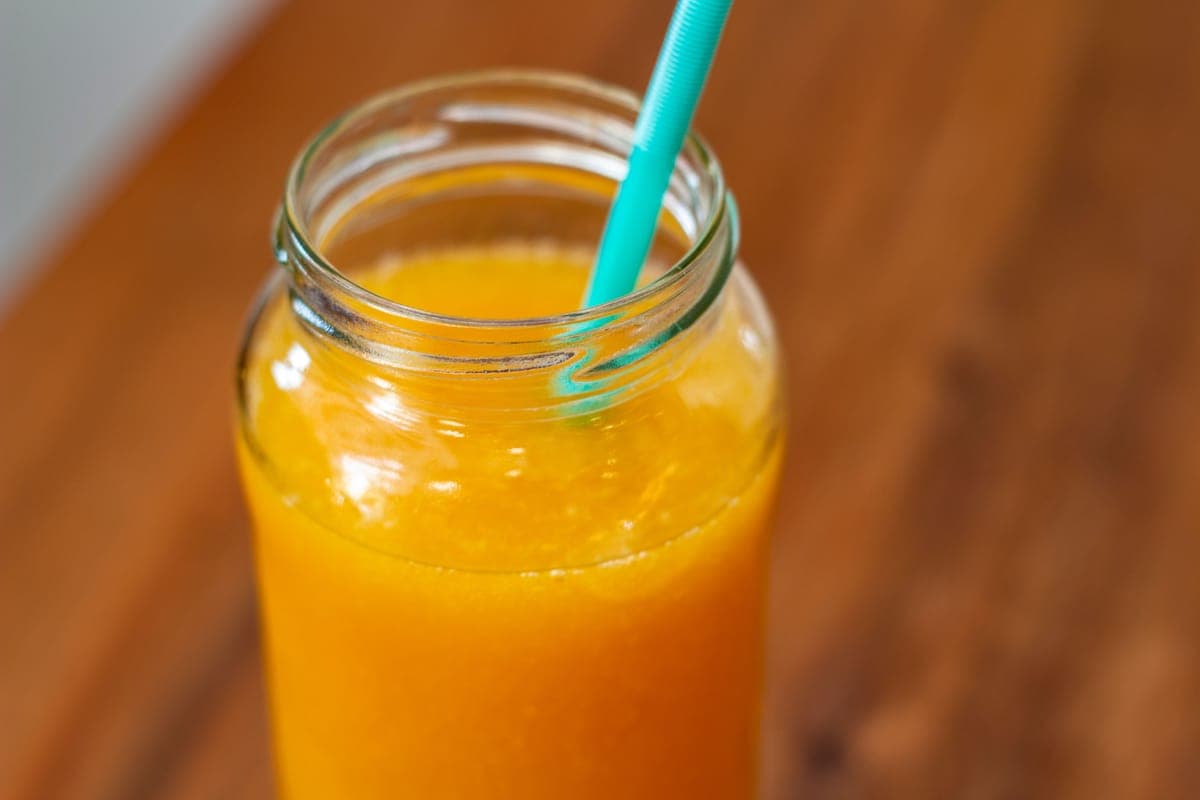
- 2.Use glass, not plastic. Glass does not absorb flavors or stain, and a wide-mouth mason jar is both cheap and the right shape.
- 3.Refrigerate immediately. Not after breakfast. Cold slows every one of the changes above.
- 4.Add lemon. Acid noticeably slows browning, particularly in apple juice, and it tastes good. The oldest trick in the category.
Freezing
Juice freezes, and it is the practical answer if you want to batch further ahead than a couple of days. Two things to know:
- Leave headspace. Liquid expands when it freezes, and a jar filled to the brim will crack. This is the one place where the fill-to-the-brim rule reverses.
- Expect texture change. Freezing and thawing separates juice more thoroughly than refrigeration does, and some of it will not fully re-suspend. Stir hard. It is still fine to drink; it looks less appealing.
Ice-cube trays are useful for small quantities -- particularly for ginger shots, where the volume is tiny and a frozen cube thaws in minutes.
What this means for your routine
If your mornings are compressed, batching is the single most effective change you can make, and it is why it appears on nearly every guide here. Prep and cleanup are largely fixed per session rather than per glass -- washing the machine takes the same ninety seconds whether you made one glass or four.
So a Sunday-evening session producing three days of juice converts three prep-and-cleanup cycles into one. If you own a machine built for that -- Kuvings' AUTO10 states a 100 oz hopper and a 45-minute continuous rating -- it is a genuinely different ownership experience. First 30 days of juicing builds up to it.
How to tell when to stop
Use your senses and err toward caution. Juice that smells fermented or fizzy, tastes sour in a way it did not, or has visible film should go down the sink. That is not a sophisticated test and it does not need to be.
The useful discipline is dating the jars. A piece of tape and a marker removes the guessing, which is where most poor decisions about stored food come from.
Questions people ask
How long does fresh juice last in the fridge?
Can you freeze fresh juice?
Why does my juice separate?
Does cold press juice last longer than centrifugal juice?
What is the best container for storing juice?
How do I know if juice has gone off?
Sources
Every figure on this page traces to one of these. Where a source does not publish a number, the page says “Not available” rather than estimating one.
- Omega J8006 specifications — 80 RPM, and Omega's claim that juice can be stored up to 72 hours without degradation
- Kuvings AUTO10 — 100 oz hopper and 45 minutes continuous running - the batching specification
Read next
Juicing Guides
Eighteen practical guides covering the habit, the criteria and the things that go wrong.
Juice Oxidation, Explained
What oxidation observably does to juice, why machine speed affects it, and where we stop.
Your First 30 Days of Juicing
A realistic four-week plan for building the habit, with what to measure in each week.
Kuvings AUTO10 Review
The batch-juicing specialist: the largest published hopper we found, and a 45-minute continuous rating.
Juicer Foam and Oxidation
Why juice foams, how to reduce it, and what oxidation does to color and taste.