Citrus Juicers for Arthritic Hands
Most citrus tools are designed around a strong grip. These are the ones that are not.
By Brijon M. · Last reviewed October 2, 2026
Almost every citrus tool sold is designed around the assumption that the user can grip firmly and twist. If that is not true for you, most of this category is unsuitable, and most roundups will not mention it. The good news is that the right mechanism exists and it is not exotic.
The answer in forty words
Why a lever changes the demand
A hinged squeezer asks your fingers to close against resistance and hold. A manual reamer asks for sustained downward pressure plus rotation, which loads the wrist. Both are precisely the movements that hurt if your hands are the problem.
A lever press asks you to lower an arm. You can use an open palm, both hands, or lean on it with your body weight. The mechanism multiplies whatever you supply -- Hamilton Beach Commercial states up to 2,000 lb of pressure from its extractor arm -- so you are not making up the difference with effort.
What to look for
- 1.A long lever arm. The longer the arm, the less force you supply for the same result. This is the single most important feature.
- 2.Stability. The press must not slide or tip while you push. Weight helps here: Breville's 800CPXL is 10.6 lb and Hamilton Beach Commercial's 932 is 11 lb, and that mass is a feature rather than a flaw.
- 3.A powered cone, if available. Breville's 800CPXL combines the lever with a 110 W motorized cone, so the machine does the extraction while you only hold the arm down. That is the least demanding setup available.
- 4.A large cup. A 5 in cup like Zulay's takes most fruit sizes without you having to position small fruit precisely, which matters if fine motor control is also affected.
- 5.Easy disassembly. Hamilton Beach Commercial states that its collector cup swings out and the strainer cone and funnel are easily removed. Cleaning should not require twisting stiff parts apart.
What to avoid
- Hinged hand squeezers, including geared ones. Chef'n's FreshForce multiplies grip cleverly and is an excellent tool, but it still requires a grip to multiply.
- Manual reamers. The twisting motion is the problem, not the force.
- Small lightweight presses that slide. If you have to hold it steady with one hand while pushing with the other, the benefit is lost.
- Anything that needs a firm twist to assemble or disassemble. Check how the parts come apart before buying, not after.
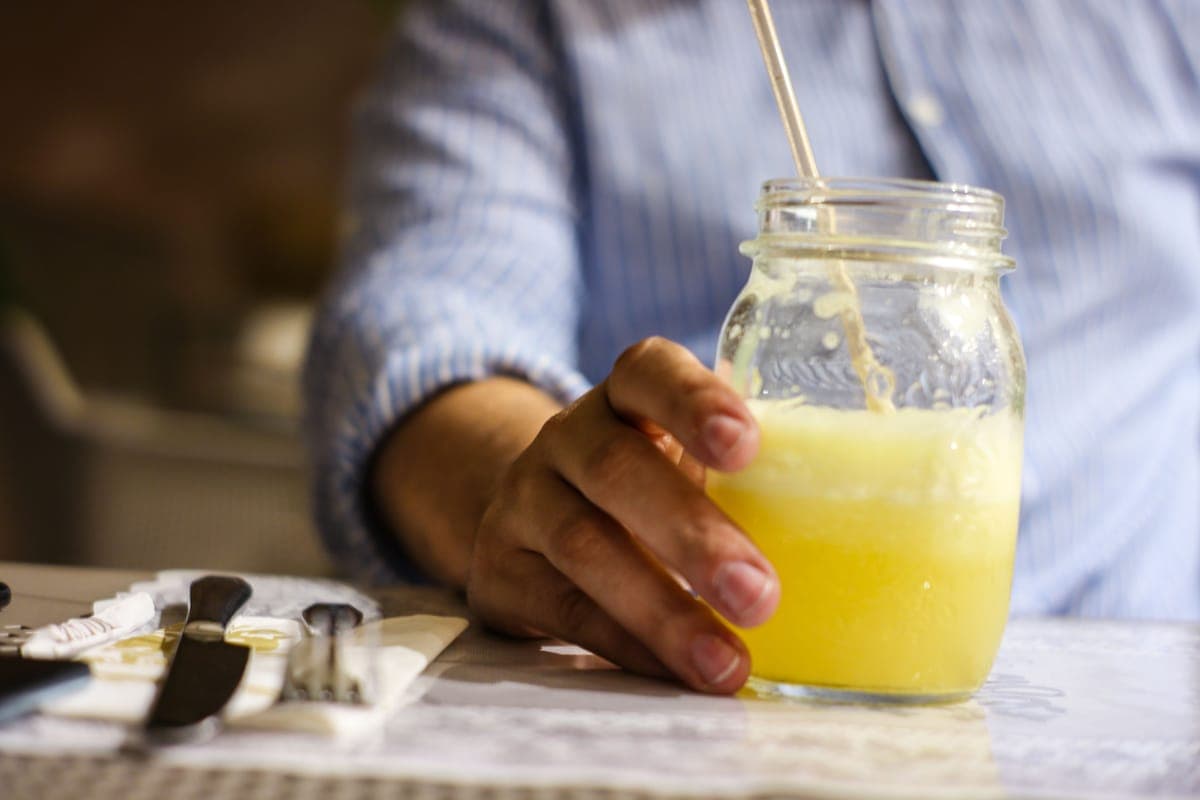
The electric middle ground
If a press will not fit your kitchen or your budget, an electric reamer is a reasonable compromise. The motor spins the cone, so you supply downward pressure without rotation -- which removes the twisting component that tends to be the worst part.
Cuisinart's CCJ-500 states an auto-reversing cone and three pulp settings with a 3-year warranty; BLACK+DECKER's CJ625 states dual auto-reversing cones and a 32 oz pitcher. Both ask less of your hands than any manual tool. Best electric citrus juicers covers them properly.
What we cannot tell you
Whether a specific tool will suit your specific condition. We are writing about mechanisms, not giving medical or occupational-therapy advice, and we have no standing to do the latter. What we can do is describe honestly which physical demand each mechanism makes, so you can match it against what you know about your own hands -- and if you have an occupational therapist, that description is the useful thing to bring to them.
One practical suggestion that costs nothing: bringing fruit to room temperature and rolling it firmly on the counter before juicing softens it noticeably, which reduces the force required whatever tool you use. How much juice comes from one lemon covers that technique.
The machines that ask least of your hands
1. Asks the least of your hands
Breville Citrus Press Pro 800CPXL
Breville 800CPXL · $200–400 · Our score 8.2/10
A lever and a motor: Breville states a die-cast powered arm at 110 W with a Quadra-Fin cone, so the machine does the extraction while you only hold the arm down. Adjustable pulp control and four dishwasher-safe parts, with a dual-switch safety feature that will not spin the cone until the arm is lowered. 10.6 lb, so it is stable under pressure. 1-year warranty.
- Yield
- Breville states the Quadra-Fin acid-resistant cone maximizes extraction; no numeric figure publishedManufacturer claim: Breville · checked 2026-10-02
- Pulp
- Breville states adjustable pulp controlManufacturer claim: Breville · checked 2026-10-02
- Cleanup time
- Breville states the juicing cone, juice collector, filter and fruit dome are dishwasher safeManufacturer claim: Breville · checked 2026-10-02
- Speed
- Breville states 110 WManufacturer claim: Breville · checked 2026-10-02
What works
- The powered lever does the work, so no hand strength is needed
- Adjustable pulp control, which most citrus juicers lack
- Four parts, all dishwasher safe
What does not
- Expensive and heavy for a single-purpose tool
- 1-year warranty
- Citrus only - it will not touch a stalk of celery
Skip this if: You juice two lemons a week. A 10.6 lb die-cast press is absurd for that, and a hand squeezer is not.
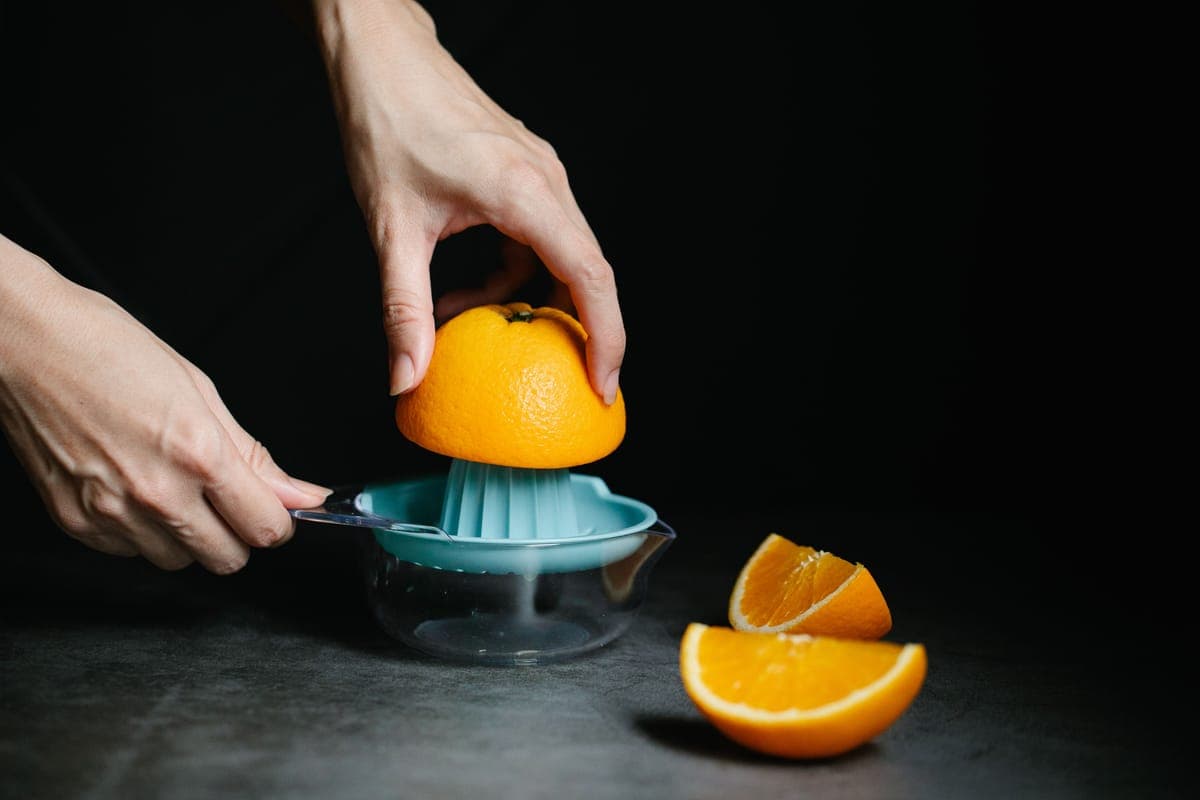
Representative photo. We have no manufacturer image library, so this is a licensed stock photo of the category, not a photo of this unit.
- Yield9/10
- Pulp9/10
- Cleanup8/10
- Value6/10
- Quiet7/10
2. Best lever press for volume
Hamilton Beach Commercial 932
Hamilton Beach Commercial 932 · $200–400 · Our score 7.9/10
Hamilton Beach Commercial states the extractor arm creates up to 2,000 lb of pressure -- the only force figure published by anyone in this category -- with an acid-resistant chrome and porcelain finish, a swing-out collector cup and easily removed strainer cone and funnel. At 11 lb and 19.5 in tall it is stable and permanent, which is what you want when pushing rather than gripping.
- Yield
- Hamilton Beach Commercial states the extractor arm creates up to 2,000 lb of pressureManufacturer claim: Hamilton Beach Commercial · checked 2026-10-02
- Pulp
- Not availableNot sourced
- Cleanup time
- Hamilton Beach Commercial states the juice collector cup swings out and the strainer cone and funnel are easily removedManufacturer claim: Hamilton Beach Commercial · checked 2026-10-02
What works
- The only pressure figure published by anyone in this category: up to 2,000 lb
- Acid-resistant chrome and porcelain finish, built for constant citrus contact
- NSF certified, so it is built to commercial hygiene standards
What does not
- 19.5 in tall and 11 lb - a permanent counter fixture
- 1-year warranty on a commercial-priced machine
- Citrus only, and overkill for domestic volume
Skip this if: This is a 19.5 in tall, 11 lb commercial fixture. For a few lemons a week it is absurd, and a hand squeezer is the right answer.

Representative photo. We have no manufacturer image library, so this is a licensed stock photo of the category, not a photo of this unit.
- Yield9/10
- Pulp7/10
- Cleanup8/10
- Value6/10
- Quiet10/10
3. Best if a press will not fit
Cuisinart Pulp Control Citrus Juicer
Cuisinart CCJ-500 · Under $100 · Our score 8.3/10
An electric reamer removes the twisting component, which is usually the worst part -- you supply downward pressure only. Cuisinart states three pulp control settings, an auto-reversing cone that handles limes through grapefruit, and a limited 3-year warranty. Cuisinart publishes no wattage or RPM for it, which is a genuine gap.
- Yield
- Not availableNot sourced
- Pulp
- Cuisinart states three pulp control settings: low, medium and highManufacturer claim: Cuisinart · checked 2026-10-02
- Cleanup time
- Not available - no published cleanup time in minutesNot sourced
- Speed
- Not available - Cuisinart publishes no wattage or RPM for this modelNot sourced
What works
- Three pulp settings at a budget price
- The auto-reversing cone handles small limes and large grapefruit
- 3-year warranty
What does not
- Citrus only
- Cuisinart publishes no power figure
- 8 oz working capacity means pouring off as you go
Skip this if: You want one juicer for everything. This does citrus and nothing else.
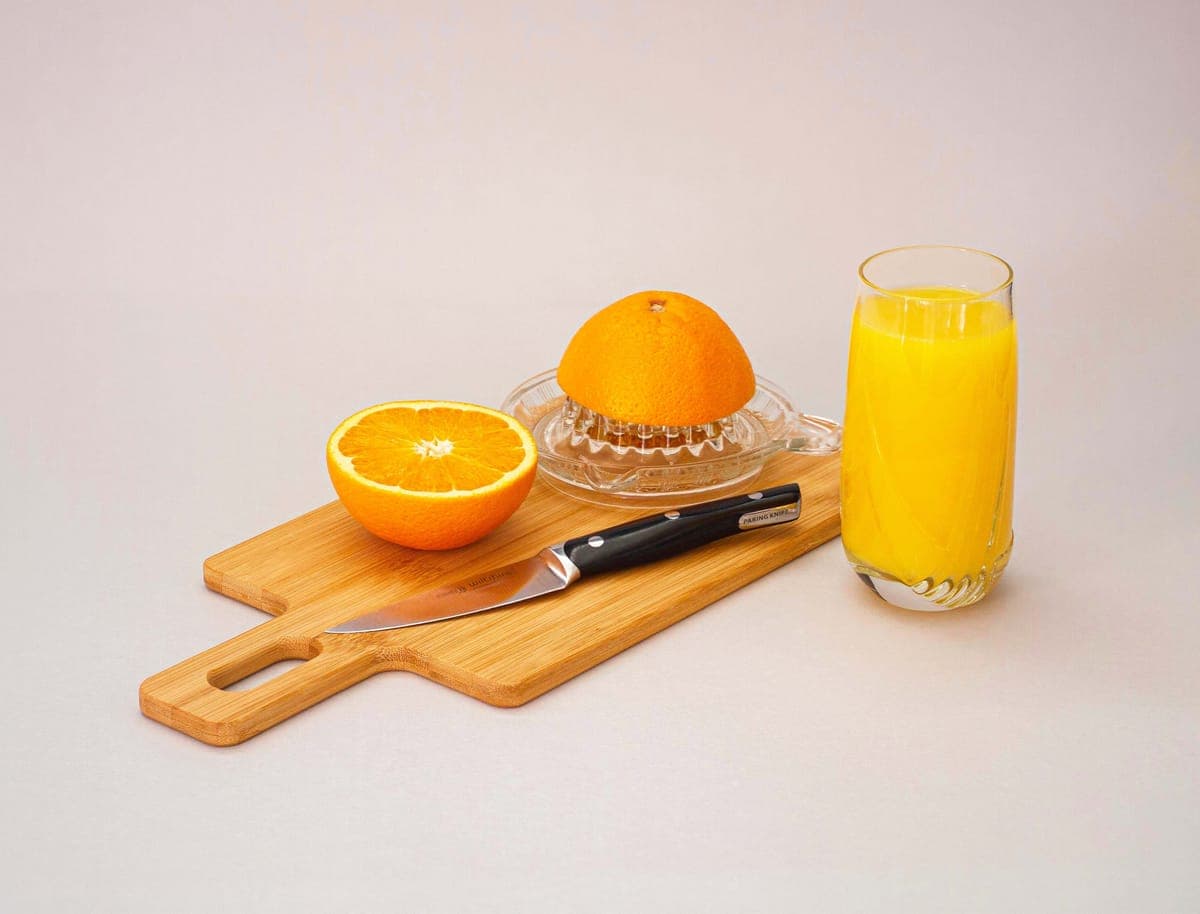
Representative photo. We have no manufacturer image library, so this is a licensed stock photo of the category, not a photo of this unit.
- Yield8/10
- Pulp9/10
- Cleanup8/10
- Value9/10
- Quiet7/10
Questions people ask
What is the best citrus juicer for arthritic hands?
Are there citrus juicers that do not need grip strength?
Is an electric citrus juicer easier on the hands than a squeezer?
Does fruit temperature make squeezing easier?
Can you recommend a tool for my specific condition?
Sources
Every figure on this page traces to one of these. Where a source does not publish a number, the page says “Not available” rather than estimating one.
- Hamilton Beach Commercial 932 — Up to 2,000 lb pressure, swing-out collector, removable strainer cone and funnel
- Breville Citrus Press Pro 800CPXL — 110 W powered lever, 10.6 lb, dual-switch safety feature
- Cuisinart CCJ-500 — Auto-reversing cone, three pulp settings, limited 3-year warranty
Read next
Citrus Juicers
Hand squeezers, electric reamers and lever presses, and a straightforward rule for which one your kitchen needs.
The Best Citrus Presses
Three lever presses for citrus volume, including the only machine in the category that publishes a pressure figure.
The Best Electric Citrus Juicers
Three electric citrus juicers, the sensible choice for a daily glass without buying a full machine.
Citrus Juicer vs Reamer vs Press
The three citrus mechanisms compared on effort, volume and cleanup, with a straight recommendation.
How Much Juice Comes From One Lemon, Lime or Orange?
Why per-fruit juice figures vary so much, and the thirty-second way to get a number you can trust.