Juicer Foam and Oxidation
Foam is air, not a fault. Here is where it comes from, how to remove it, and what oxidation genuinely changes.
By Brijon M. · Last reviewed October 2, 2026
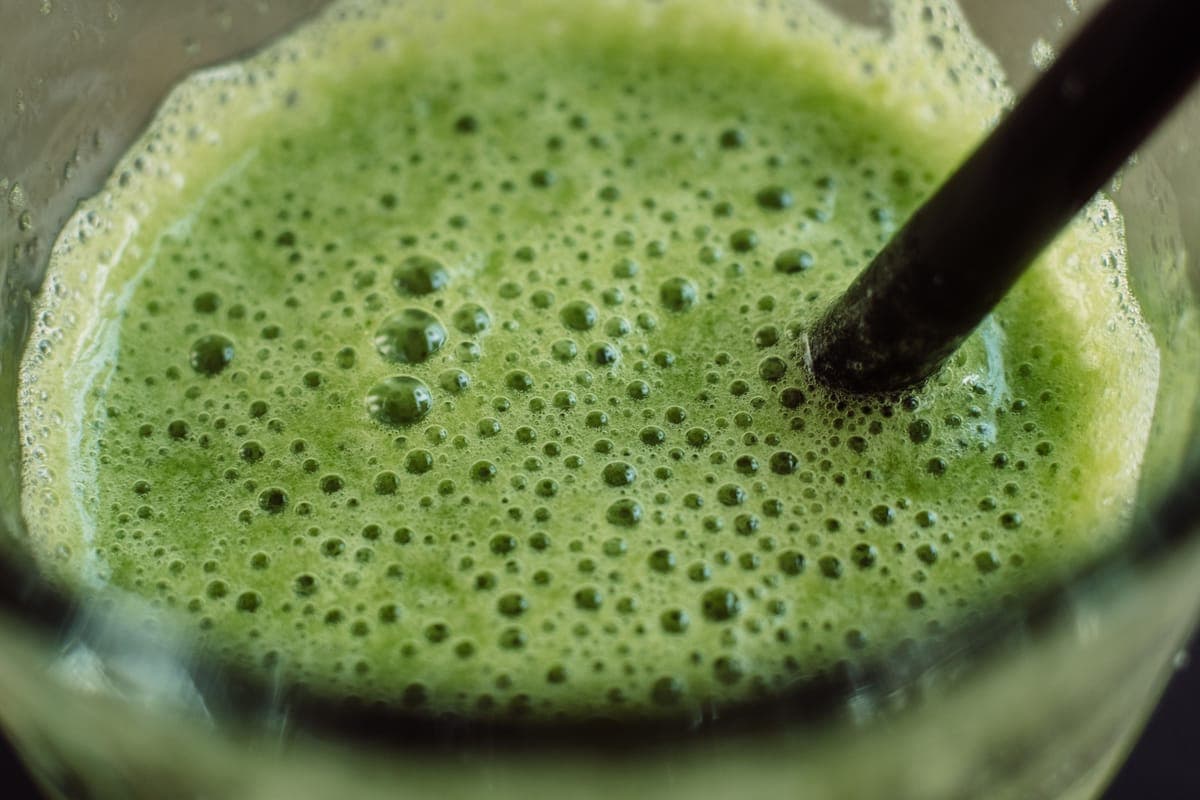
Foam on fresh juice is air that got whipped in during extraction. It is not spoilage, not a sign of a broken machine, and not something to worry about. It settles on its own, it can be skimmed, and it is far more common on fast juicers than slow ones for a straightforward mechanical reason.
Where the foam comes from
A centrifugal basket spinning at thousands of RPM is also a fan. Our registry includes machines running at 6,500 to 18,000 RPM, and moving that much air next to liquid aerates it. The faster the basket, the more foam.
Breville effectively concedes the point by engineering around it: the JE98XL ships with a froth separator built into the carafe, which holds the foam back as you pour. That is a manufacturer solving a known characteristic of its own mechanism, and it is the clearest evidence that foam is inherent rather than a defect.
Slow juicers foam much less. At 43 to 110 RPM there is simply not enough air movement to whip the juice. You will still see a light head on some produce, particularly apples and anything with a high natural sugar content, but it is a different order of magnitude.
Four ways to reduce it
- 1.Use the low speed. Breville states dual speeds on the JE98XL at 6,500 and 12,000 RPM; Mueller states 12,000-15,000 and 15,000-18,000. The low setting is the single biggest lever you have.
- 2.Use a froth separator if your machine has one. The JE98XL's carafe includes one. If yours does not, pour through a fine strainer into the glass -- it does the same job.
- 3.Let it stand for two minutes. Foam is unstable. It collapses on its own, and the two minutes cost you nothing because you were going to drink it anyway.
- 4.Chill the produce first. Cold liquid holds less dissolved gas and the foam that forms is less persistent. Not a dramatic effect, but a free one.
What oxidation actually is
Oxygen reacting with compounds in the juice. The visible, verifiable effects are color and taste: apple juice browns, green juice dulls, and the flavor flattens and sharpens over hours. Anyone who has left a glass of fresh juice on a counter has seen it.
More air whipped in during extraction means more oxygen in contact with more surface area, so a fast juicer's output changes faster than a slow juicer's. That is the mechanical argument behind the "cold press" name, and it is a reasonable one.
What we are not going to tell you about it
What this means if you batch
If you make juice to drink immediately, foam and oxidation are both non-issues -- the juice is gone before either matters. They only become practical considerations if you are making two or three days at once, which is a common and sensible approach to the time cost of juicing.
For batching, the useful moves are filling containers to the brim so there is minimal air above the liquid, using glass rather than plastic, and refrigerating immediately. Omega claims juice from its 80 RPM machines can be stored up to 72 hours, which is the longest manufacturer storage claim we found. How long fresh juice lasts covers the published claims and their limits.
Is foam ever a warning sign?
Foam itself, no. What is worth paying attention to is a sudden change: if a machine that produced little foam starts producing a lot, the usual cause is a partially blocked mesh screen making the juice work harder to get through. Clean it properly and see whether it returns. Why your juicer is not making much juice covers the same symptom from the other direction.
Questions people ask
Why does my juicer make so much foam?
How do I get rid of foam in juice?
Is the foam from juicing bad for you?
Do slow juicers make foam?
Does foam mean I am losing juice?
Sources
Every figure on this page traces to one of these. Where a source does not publish a number, the page says “Not available” rather than estimating one.
- Breville Juice Fountain Plus JE98XL — Dual speed 6,500 and 12,000 RPM, carafe with froth separator
- Mueller Austria Juicer Ultra — Dual speed 12,000-15,000 and 15,000-18,000 RPM
- Omega J8006 specifications — Omega's claim that juice can be stored up to 72 hours
Read next
Centrifugal Juicers
Fast juicers with wide chutes and low prices: what the spinning-basket mechanism does well, and where it fails.
Juice Oxidation, Explained
What oxidation observably does to juice, why machine speed affects it, and where we stop.
How Long Does Fresh Juice Last?
What manufacturers claim about juice storage, and the practical rules for batching several days at once.
How Centrifugal Juicers Work
The spinning-basket mechanism explained, and why the same physics that makes it fast makes it fail on fiber.
Why Is My Juicer Not Making Much Juice?
A diagnostic order for thin juice and wet pulp, from the screen outward.