How Much Juice Comes From One Lemon, Lime or Orange?
The honest answer is that it depends on the fruit more than on the tool. Here is how to find your own number.
By Brijon M. · Last reviewed October 2, 2026
This is one of the most searched questions in citrus and one of the least honestly answered. The figures you will find quoted are averages of unstated provenance, and the real variation between two lemons from the same bag is large enough to make any single number misleading.
Why we are not going to give you a table of numbers
Because we would be making them up. We have not measured citrus yield, we found no authoritative source measuring it in a way we would want to republish, and the figures circulating are typically presented without any statement of fruit size, variety, ripeness or extraction method -- all four of which change the answer substantially.
A thin-skinned ripe lemon at room temperature in a lever press gives dramatically more than a thick-skinned underripe one squeezed by hand straight from the fridge. Quoting a single figure as though it were a property of lemons is the kind of confident-sounding content we are specifically trying not to write. How we pick sets out where this line sits for us.
The four things that actually change the answer
- 1.Size and variety. A Meyer lemon, a Eureka lemon and a Persian lime are different fruit with different flesh-to-pith ratios. Supermarket sizing grades vary by season.
- 2.Ripeness. A fully ripe fruit yields noticeably more than a firm underripe one, and it tastes different too.
- 3.Temperature. Room-temperature fruit yields more than fridge-cold fruit, because the flesh is more pliable. This is the single easiest free improvement.
- 4.The tool, and how hard it presses. A lever press applies far more force than a hand you can close -- Hamilton Beach Commercial quotes up to 2,000 lb for its press. The fruit gives up more of what it has.
How to get a number you can actually trust
Measure it once, with your fruit and your tool, and you will have a figure that is right for your kitchen rather than an average for somebody else's:
- 1.Take three fruit of the kind you normally buy.
- 2.Bring them to room temperature and roll each firmly on the counter under your palm -- this breaks down the internal membranes and genuinely increases yield.
- 3.Juice all three into a measuring jug. OXO's 2-in-1 reamer has markings built in, which is exactly what they are for.
- 4.Divide by three. That is your number, and it will stay roughly right for as long as you keep buying the same fruit.
Write it on a sticky note inside a cupboard door. It converts every recipe that says "juice of two lemons" into something you can shop for.
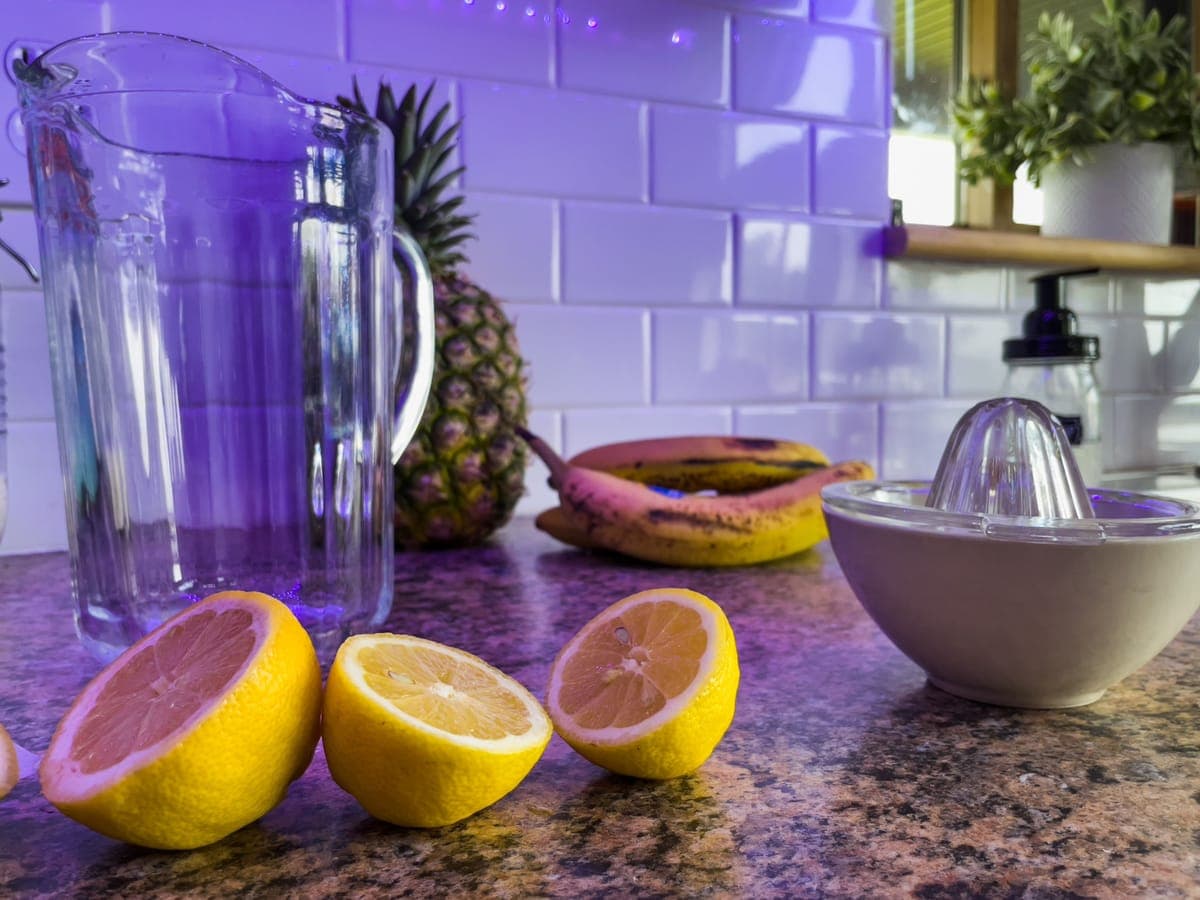
Three free ways to get more out of each fruit
- Room temperature, not fridge cold. Cold flesh is firmer and holds onto its liquid. Ten minutes on the counter is enough.
- Roll it first. Press down with your palm and roll the fruit on the counter until it softens slightly. This ruptures the internal segments before you apply pressure.
- Squeeze twice, rotating. On a reamer or a squeezer, a second pass at ninety degrees reaches segments the first pass flattened rather than emptied.
If you are doing enough citrus for these to feel like a chore, that is the signal to move to a lever press -- see best citrus presses. The lever does what the rolling and the second squeeze are compensating for.
A note on recipes
Recipes that specify "the juice of one lemon" are inherently imprecise for all the reasons above, which is why careful baking recipes give a volume instead. If a recipe matters, measure the juice rather than counting the fruit -- a reamer over a marked jug makes that a single step rather than two.
Questions people ask
How much juice is in one lemon?
How do I get more juice out of a lemon?
Why do recipes say juice of one lemon instead of a volume?
Does a press get more juice than a hand squeezer?
Should I roll citrus before juicing it?
Sources
Every figure on this page traces to one of these. Where a source does not publish a number, the page says “Not available” rather than estimating one.
- Hamilton Beach Commercial 932 — Up to 2,000 lb of pressure from the extractor arm
- OXO Good Grips 2-in-1 Citrus Juicer — 1.5 cup jug with measuring markings and a built-in strainer
Read next
Citrus Juicers
Hand squeezers, electric reamers and lever presses, and a straightforward rule for which one your kitchen needs.
The Best Manual Citrus Juicers
Hand squeezers and reamers: the right answer for a few lemons a week, and useful even if you own a machine.
The Best Citrus Presses
Three lever presses for citrus volume, including the only machine in the category that publishes a pressure figure.
Juicer Yield, Explained
Why juicer yield figures do not exist, where the circulating numbers come from, and how to measure your own.
The Best Juicers for Oranges
Four options for orange juice, and the honest case for not buying a general juicer at all.