Is a Citrus Juicer Worth It?
There is a volume above which a dedicated citrus machine is obviously right and below which it is obviously wrong. Here is where the line sits.
By Brijon M. · Last reviewed October 5, 2026
A citrus juicer is worth it if you squeeze citrus more than two or three times a week, and it is not if you squeeze a lemon occasionally for cooking. That is the whole answer, and the reason is that the cheap end of this category is genuinely good: a $12 hand squeezer with a dual-gear mechanism does the occasional job properly, so a dedicated machine has to beat that rather than beating bare hands.
Why this question is different from the general one
Is a juicer worth it asks whether to take up juicing at all, and most of its cost is the produce rather than the machine. Citrus is a different calculation. You are almost certainly already buying lemons and oranges; the question is only whether a tool makes the squeezing better. And unlike green juice, where the cheapest machines are bad at the job, citrus has excellent sub-$20 options -- which raises the bar for everything above them.
So the honest framing is not "machine versus no machine". It is which of four tools fits your volume: bare hands, a handheld squeezer, an electric reamer, or a lever press. Citrus juicer vs reamer vs press covers how each mechanism works; this page is about which one your week justifies.
The volume threshold, tool by tool
| Your actual volume | The right tool | Why |
|---|---|---|
| A few lemons or limes a week, for cooking | Handheld squeezer, under $20 | Chef'n states a dual-gear mechanism and a seed-straining bowl; it lives in a drawer and has nothing to fail. |
| Juice for measuring, occasional baking | Two-in-one reamer with a measure | OXO states a built-in strainer and dishwasher safety; measuring the juice is the feature. |
| A glass of orange juice most mornings | Electric reamer | Cuisinart states three pulp control settings and a 3-year warranty. A daily glass by hand is tiring; this removes the effort for little money. |
| Several glasses a day, a home bar, a household | Lever press | Breville states a die-cast lever arm and pulp control; Hamilton Beach Commercial states up to 2,000 lb of pressure from its extractor arm. |
| Hands that ache, at any volume | Lever press, not a reamer | A reamer needs sustained twisting pressure, which is exactly what a lever removes. |
Four cases where it is clearly worth it
- A daily glass of orange juice. Four to five oranges by hand, every morning, is the clearest case on this page. An electric reamer under $100 pays for itself in effort within a month.
- You make cocktails. Fresh lime is the whole point of most drinks worth making, and at three or four limes per round a squeezer becomes the slow step. Best citrus presses covers the bar-grade options.
- Grip strength is a problem. This is the case where the machine is not a convenience but the difference between having fresh juice and not. A lever multiplies force so your hand does not have to.
- You are juicing for more than yourself. A press is the only tool here that scales -- see best juicers for families for the household version of this question.
Three cases where it is not
- Occasional cooking. A lemon a week does not justify a counter appliance when a $12 drawer tool does the job properly and goes in the dishwasher.
- You already own a cold press or centrifugal juicer. It will do oranges -- awkwardly, with peeling and more washing up, but it will do them. Whether a second machine is worth it depends entirely on how often, which is the same threshold question.
- You want one machine for everything. A citrus juicer does citrus and nothing else -- no greens, no carrots, no apples. Can you use a citrus juicer for vegetables answers that directly, and the answer is no.
The picks in full
1. Below the threshold: this is enough
Chef'n FreshForce Citrus Juicer
Chef'n · Under $100 · Our score 8.7/10
If you squeeze a lemon or two a week for cooking and cocktails, this is the complete answer and anything else is overbuying. Chef'n states a dual-gear mechanism that multiplies hand pressure, a perforated bowl that strains seeds and most pulp, and top-rack dishwasher safety. It lives in a drawer, takes no counter space and has no motor to fail. The limits are honest ones: it is for a few ounces rather than a breakfast glass, and it needs hand strength, so if your grip aches see citrus juicers for arthritic hands.
- Yield
- Chef'n claims 20 percent more juice than conventional handheld juicers; the comparison basis is not publishedManufacturer claim: Chef'n · checked 2026-10-02
- Pulp
- The perforated bowl strains seeds and most pulp, per Chef'nManufacturer claim: Chef'n · checked 2026-10-02
- Cleanup time
- Chef'n states it is top-rack dishwasher safeManufacturer claim: Chef'n · checked 2026-10-02
What works
- The dual gear mechanism multiplies hand pressure
- One piece, dishwasher safe, and it lives in a drawer
- The cheapest tool on the whole site
What does not
- The 20 percent claim is Chef'n's own and has no stated comparison basis
- It still needs hand strength - read the arthritis guide before buying
- Lemon and lime sized, not orange sized
Skip this if: You want a full glass of orange juice. Handheld squeezers are for a few ounces, not a breakfast habit.
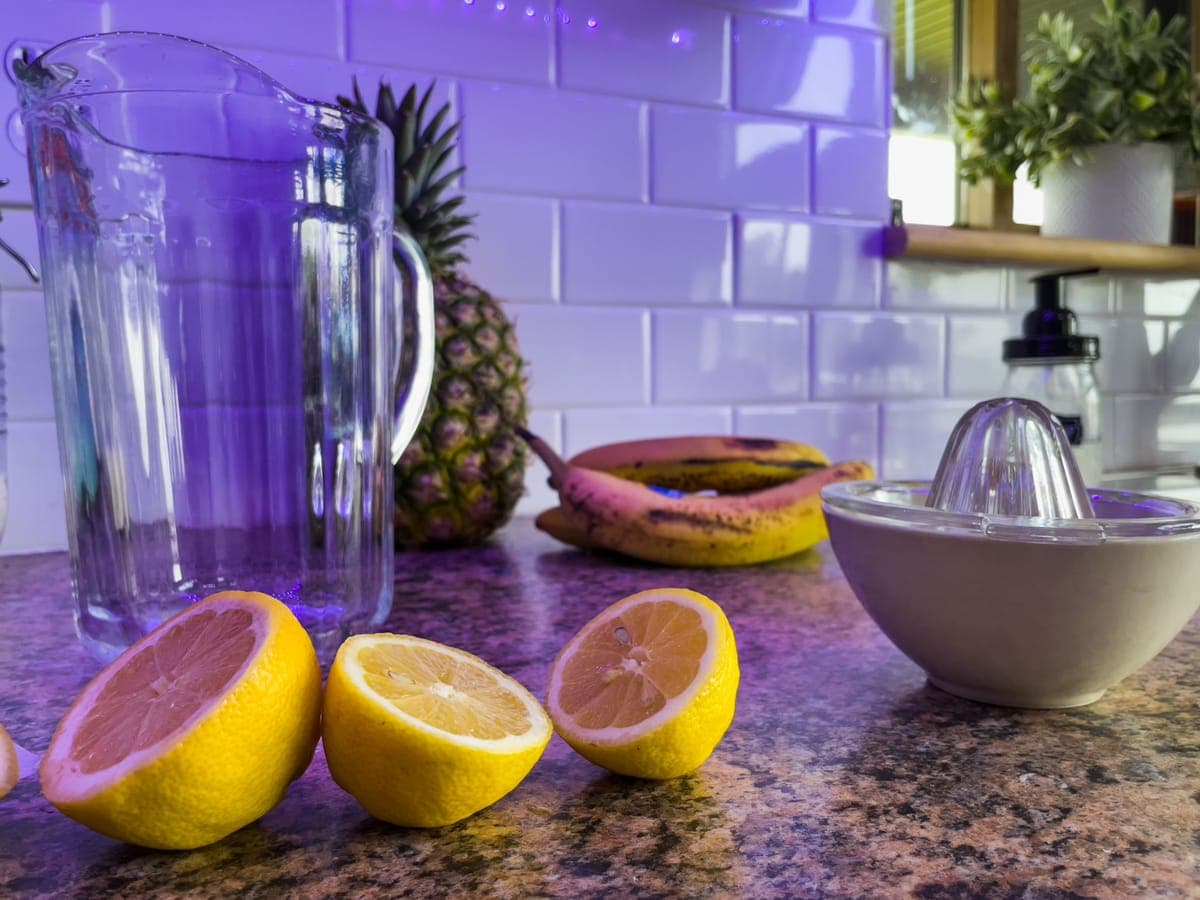
Representative photo. We have no manufacturer image library, so this is a licensed stock photo of the category, not a photo of this unit.
- Yield7/10
- Pulp8/10
- Cleanup10/10
- Value10/10
- Quiet10/10
2. At the threshold: a daily glass
Cuisinart Pulp Control Citrus Juicer
Cuisinart CCJ-500 · Under $100 · Our score 8.3/10
The machine that justifies itself fastest, because a daily glass of orange juice by hand is genuinely tiring. Cuisinart states three pulp control settings -- low, medium and high -- and covers it with a limited 3-year warranty, three times what Breville gives on its citrus press. One honest gap: Cuisinart publishes no wattage or RPM for this model, so you are buying on the pulp control and the warranty rather than on specification.
- Yield
- Not availableNot sourced
- Pulp
- Cuisinart states three pulp control settings: low, medium and highManufacturer claim: Cuisinart · checked 2026-10-02
- Cleanup time
- Not available - no published cleanup time in minutesNot sourced
- Speed
- Not available - Cuisinart publishes no wattage or RPM for this modelNot sourced
What works
- Three pulp settings at a budget price
- The auto-reversing cone handles small limes and large grapefruit
- 3-year warranty
What does not
- Citrus only
- Cuisinart publishes no power figure
- 8 oz working capacity means pouring off as you go
Skip this if: You want one juicer for everything. This does citrus and nothing else.
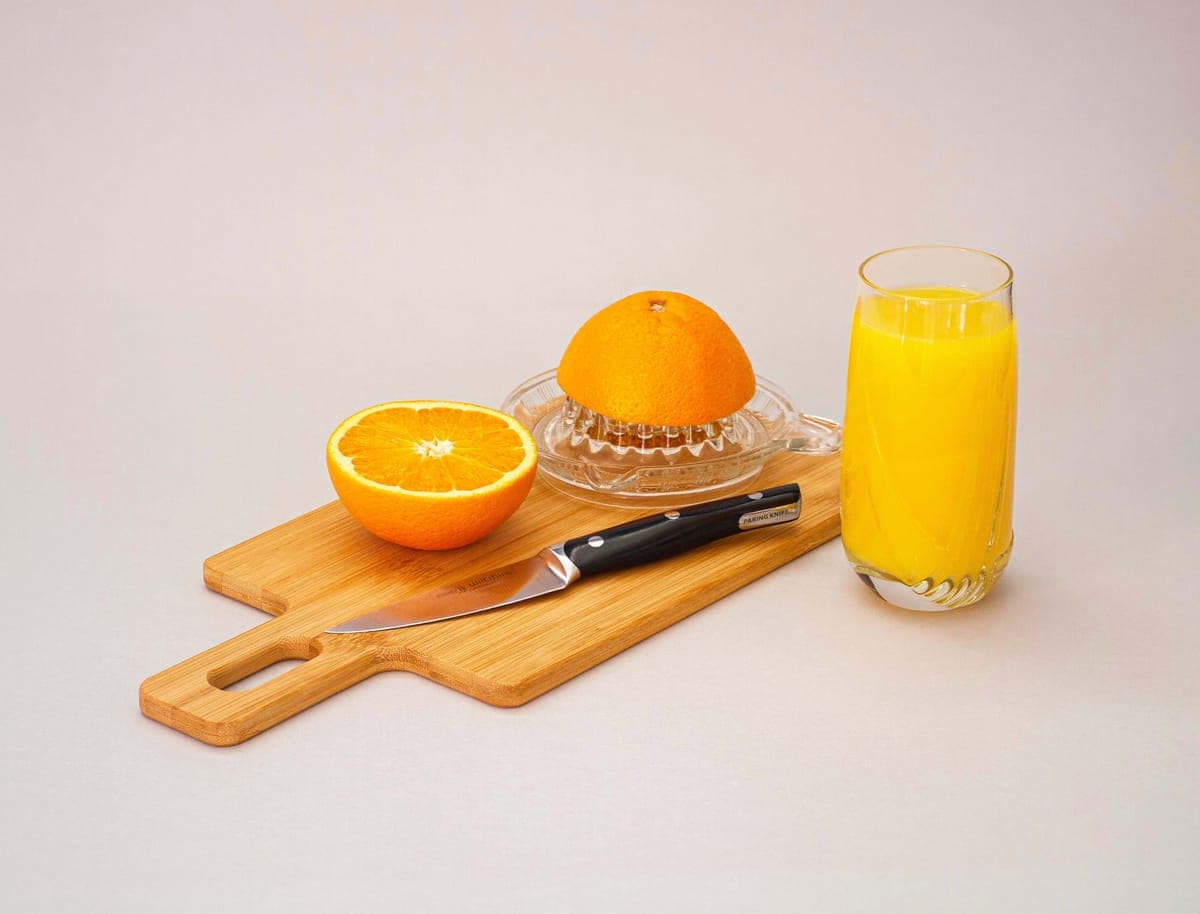
Representative photo. We have no manufacturer image library, so this is a licensed stock photo of the category, not a photo of this unit.
- Yield8/10
- Pulp9/10
- Cleanup8/10
- Value9/10
- Quiet7/10
3. Above the threshold: real volume
Breville Citrus Press Pro 800CPXL
Breville 800CPXL · $200–400 · Our score 8.2/10
When the household drinks orange juice rather than having it occasionally, a lever press changes the job. Breville states a die-cast stainless lever arm, adjustable pulp control and 110 W -- the arm does the work your wrist otherwise does, which is why volume stops being the constraint. The counter-argument is plain: it is a 10.6 lb die-cast fixture, and for two lemons a week it is absurd. One year of warranty, and it does citrus and nothing else.
- Yield
- Breville states the Quadra-Fin acid-resistant cone maximizes extraction; no numeric figure publishedManufacturer claim: Breville · checked 2026-10-02
- Pulp
- Breville states adjustable pulp controlManufacturer claim: Breville · checked 2026-10-02
- Cleanup time
- Breville states the juicing cone, juice collector, filter and fruit dome are dishwasher safeManufacturer claim: Breville · checked 2026-10-02
- Speed
- Breville states 110 WManufacturer claim: Breville · checked 2026-10-02
What works
- The powered lever does the work, so no hand strength is needed
- Adjustable pulp control, which most citrus juicers lack
- Four parts, all dishwasher safe
What does not
- Expensive and heavy for a single-purpose tool
- 1-year warranty
- Citrus only - it will not touch a stalk of celery
Skip this if: You juice two lemons a week. A 10.6 lb die-cast press is absurd for that, and a hand squeezer is not.
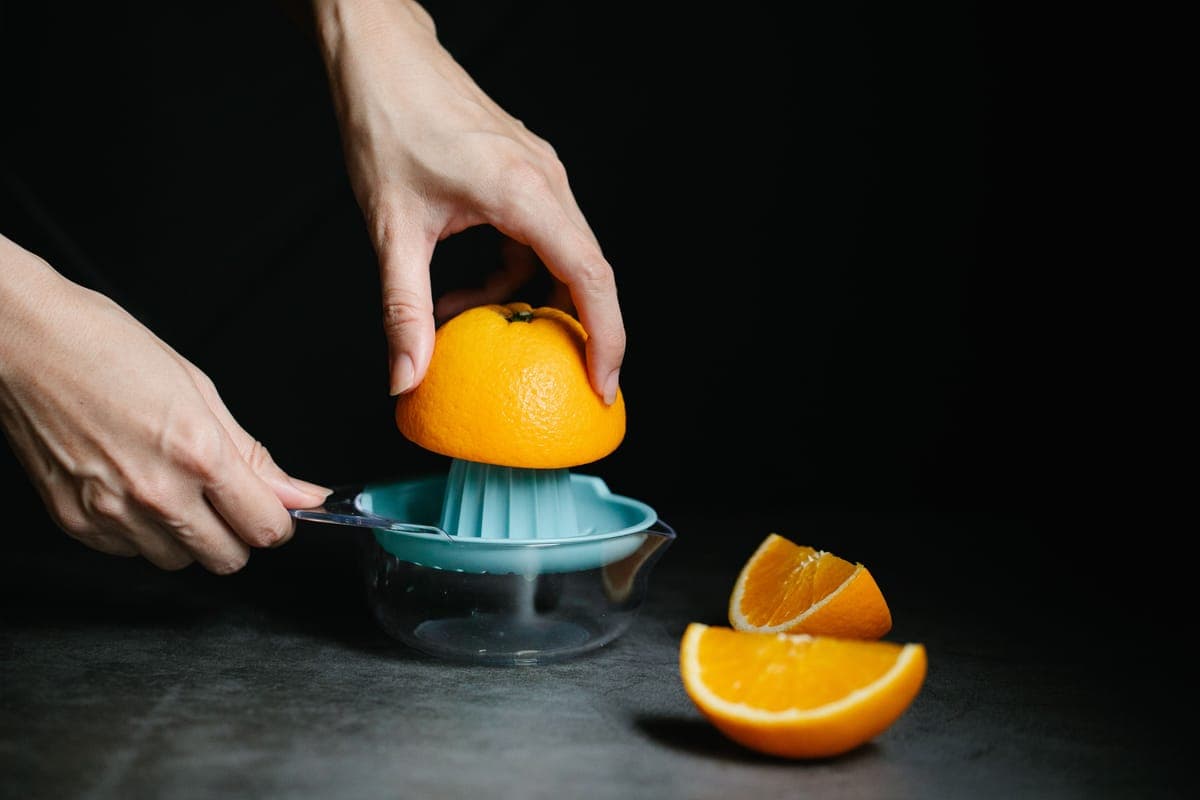
Representative photo. We have no manufacturer image library, so this is a licensed stock photo of the category, not a photo of this unit.
- Yield9/10
- Pulp9/10
- Cleanup8/10
- Value6/10
- Quiet7/10

The cheaper comparison nobody makes
Against bought juice rather than against other machines. A carton of orange juice is cheap, and the case for squeezing your own is taste and freshness rather than money -- fresh citrus juice tastes different from pasteurized carton juice, which is a real difference and not a nutritional claim. If the appeal is cost, the arithmetic is weak and we would rather say so. If the appeal is the taste of juice squeezed four minutes ago, then the only question left is the volume threshold above.
One practical point if you do buy: citrus juice behaves the same way as any other fresh juice in storage, so the daily-glass case assumes you drink it rather than batch it. How long fresh juice lasts sets out what is actually knowable about that.
Questions people ask
Is a citrus juicer worth it?
Is an electric citrus juicer better than a manual one?
Is a citrus press worth it over a reamer?
Can I just use my regular juicer for oranges?
Does a citrus juicer give more juice than squeezing by hand?
Sources
Every figure on this page traces to one of these. Where a source does not publish a number, the page says “Not available” rather than estimating one.
- Chef'n FreshForce Citrus Juicer — Dual-gear mechanism, seed-straining bowl, top-rack dishwasher safe
- Cuisinart Pulp Control Citrus Juicer CCJ-500 — Three pulp control settings, 3-year limited warranty, no wattage published
- Breville Citrus Press Pro 800CPXL — Die-cast lever arm, adjustable pulp control, 110 W
- Hamilton Beach Commercial 932 — Extractor arm stated to create up to 2,000 lb of pressure
- OXO Good Grips 2-in-1 Citrus Juicer — Built-in strainer, dishwasher safe
Read next
The Best Citrus Juicers
Five citrus juicers across all three mechanisms, with a volume rule for choosing between them.
Citrus Juicer vs Reamer vs Press
The three citrus mechanisms compared on effort, volume and cleanup, with a straight recommendation.
Can You Use a Citrus Juicer for Vegetables?
Why reamers and presses cannot juice vegetables, which borderline produce almost works, and what to buy instead.
Is a Juicer Worth It?
The real costs of juicing, and four situations where the honest answer is that it is not worth it.
Are Expensive Juicers Worth It?
What the money actually buys as you move up the price bands, and the three cases where a premium machine genuinely pays for itself.