Cleaning a Cold Press Juicer
The difference between ninety seconds and six minutes is almost entirely about when you do it, not which machine you own.
By Brijon M. · Last reviewed October 2, 2026
Cleanup is the most common reason a cold press juicer stops getting used, and it is almost entirely a timing problem rather than a machine problem. Wet pulp rinses off in seconds. The same pulp, dried into a mesh screen twenty minutes later, needs a brush and some patience.
The routine, in order
- 1.Before you drink the juice, not after. This is the whole trick. Pour the glass, set it down, and deal with the machine first.
- 2.Empty the pulp bin into the bin or compost. If you line the bin with a bag, it never needs washing at all.
- 3.Run a drum of water through the machine. Switch it on, pour a cup or two of water into the chute, and let it push through. This clears most of the loose pulp from the auger and the screen without taking anything apart.
- 4.Take it apart and rinse under the tap. Auger, screen, drum, lid. Hot water, no soap needed at this stage, thirty seconds.
- 5.Brush the screen. Most machines ship a brush for exactly this. Work from the outside so you push pulp out of the holes rather than into them.
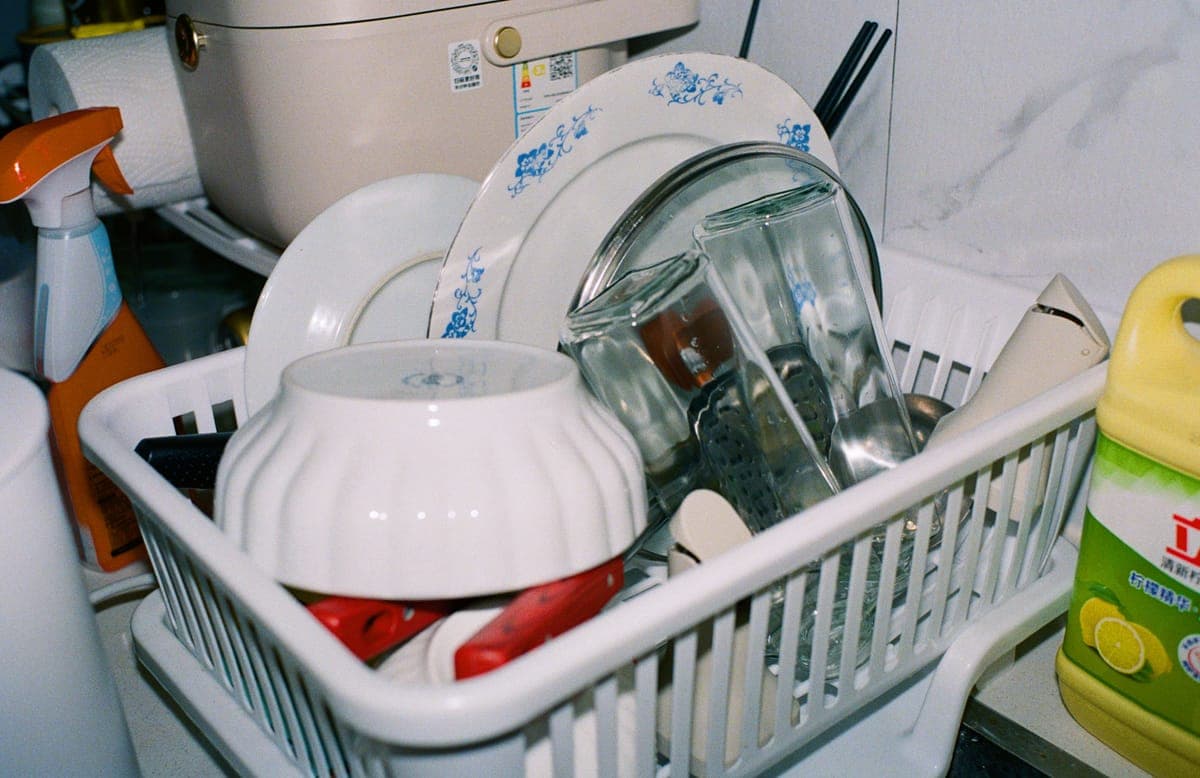
- 6.Stand the parts up to drain. Do not stack them wet inside each other -- that is how a faint smell develops.
Done in that order, immediately, on a vertical machine with three or four parts, this is a ninety-second job. Deferred until after breakfast, the same job takes four to six minutes and feels much worse than that.
The screen is the whole problem
Everything else on a cold press juicer is smooth plastic and rinses clean. The fine mesh screen is the only component that genuinely holds residue, because pulp dries into the perforations and then has to be dislodged individually.
Which is why the premium end of the category has started removing it. Hurom's Easy Clean design has no mesh strainer at all -- the brand markets it as Scrub-Free Cleaning -- and Cuisinart's CSJ-300 uses a mesh-free filter at a third of the price. That is a structural answer, not a better brush.
The trade is real and worth knowing: a fine screen is what holds back very fine pulp, so removing it generally means slightly more sediment in the glass and slightly wetter pulp in the bin. Neither brand publishes a figure for that, so we describe it rather than quantify it. The easiest juicers to clean ranks the field on this.
What to do about stains
Carrots and beets stain plastic, particularly turmeric, which will tint an auger permanently if you let it sit. The practical approach is to rinse immediately -- again -- and to accept some discolouration on a machine you use for root vegetables daily. It is cosmetic and it does not affect the juice.
For a deeper clean, a soak in warm water with a little white vinegar lifts mineral residue and dulled surfaces. Check your manual before using anything stronger, and never put a part in a dishwasher unless the manufacturer states it is safe -- Ninja states that for the JC151's removable parts, and many brands do not state it at all. How to clean a juicer covers the detail.
What nobody publishes
Can you skip a day?
Not really, and the reason is mechanical rather than hygiene theater. Dried pulp in a mesh screen is dramatically harder to remove than wet pulp, so skipping today makes tomorrow's job worse rather than equal. If you are genuinely out of time, the minimum viable version is: empty the pulp bin, run water through, and leave the parts submerged in a bowl of water until you can deal with them. That prevents the drying, which is the actual enemy. Do you have to clean a juicer after every use goes further.
The machines that remove the screen
1. No mesh strainer at all
Hurom H400 Easy Clean
Hurom H400 · $400+ · Our score 8.0/10
Hurom's Easy Clean drum has no mesh strainer, which removes the slow part of cleaning a cold press juicer rather than easing it -- the brand calls it Scrub-Free Cleaning. Hurom also states 15 years on motor and parts, 90 RPM and 150 W. The 45 mm chute means real chopping, and the yield claims are Hurom's own.
- Yield
- Hurom claims the highest yield and least pulp of any Easy Clean model; no numeric figure, and no independent verification we could findManufacturer claim: Hurom · checked 2026-10-02
- Pulp
- Hurom claims the least pulp of any Easy Clean model; no comparable figure publishedManufacturer claim: Hurom · checked 2026-10-02
- Cleanup time
- Hurom markets it as Scrub-Free Cleaning; no cleanup time in minutes is publishedManufacturer claim: Hurom · checked 2026-10-02
- Speed
- Hurom states 90 RPM, 150 WManufacturer claim: Hurom · checked 2026-10-02
What works
- No mesh strainer to scrub - the design removes the part people complain about most
- 15 years on motor AND parts, which is rare
- Lighter than most verticals at 14.8 lb, so storing it away is realistic
What does not
- 1.8 in chute means real prep chopping
- The yield and pulp claims are Hurom's own and unverified by any test we could find
- 90 RPM is the fast end of slow juicing
Skip this if: You juice a lot of wheatgrass or very fibrous greens - the wide-gap Easy Clean design trades some fine-strainer extraction for speed at the sink.
Representative photo. We have no manufacturer image library, so this is a licensed stock photo of the category, not a photo of this unit.
- Yield8/10
- Pulp8/10
- Cleanup9/10
- Value6/10
- Quiet8/10
2. The same idea, far cheaper
Cuisinart Easy Clean Slow Juicer
Cuisinart CSJ-300 · $100–200 · Our score 7.7/10
Cuisinart states a mesh-free easy-clean filter at roughly a third of the price, with a limited 3-year warranty and 1.5 L capacity. Less refined, mechanically the same answer. Cuisinart publishes no RPM for this model, which is a real gap when comparing.
- Yield
- Not availableNot sourced
- Pulp
- Cuisinart states a mesh-free easy-clean filterManufacturer claim: Cuisinart · checked 2026-10-02
- Cleanup time
- Marketed as easy clean on the strength of the mesh-free filter; no cleanup time publishedManufacturer claim: Cuisinart · checked 2026-10-02
- Speed
- Not available - Cuisinart publishes 200 W but no RPM for this modelNot sourced
What works
- No mesh screen, so the part most people hate washing is simply absent
- 3-year warranty, triple what Ninja and Nutribullet quote
- 1.5 L capacity is generous for the price
What does not
- Cuisinart publishes no RPM, so you cannot compare its speed to anything
- No yield figure of any kind
- Mesh-free filters generally trade some fine extraction for easier washing
Skip this if: You want a published speed figure before you buy. Cuisinart does not state an RPM for this model anywhere we could find.
Representative photo. We have no manufacturer image library, so this is a licensed stock photo of the category, not a photo of this unit.
- Yield7/10
- Pulp7/10
- Cleanup9/10
- Value8/10
- Quiet7/10
3. Let the dishwasher do it
Ninja NeverClog JC151
Ninja JC151 · $100–200 · Our score 7.9/10
A different strategy that works just as well: Ninja states that all removable parts are dishwasher safe, so the washing stops being yours. Two swappable pulp filters as well. 150 W, no published RPM, 1-year US warranty.
- Yield
- Not availableNot sourced
- Pulp
- Ninja states two pulp filters, for less pulp or more pulpManufacturer claim: Ninja · checked 2026-10-02
- Cleanup time
- Ninja states the removable parts are dishwasher safe; no cleanup time publishedManufacturer claim: Ninja · checked 2026-10-02
- Speed
- Ninja states 150 W; no RPM publishedManufacturer claim: Ninja · checked 2026-10-02
What works
- Genuine pulp choice: two filters, not a marketing claim
- Dishwasher-safe removable parts
- Widely stocked at the big retailers, so it is easy to find and easy to return
What does not
- 1-year US warranty
- Ninja publishes no RPM, so it cannot be compared on speed
- 24-30 oz jug means emptying on bigger batches
Skip this if: You want a long warranty. Ninja covers this for one year in the US, against 15 on the premium verticals.

Representative photo. We have no manufacturer image library, so this is a licensed stock photo of the category, not a photo of this unit.
- Yield7/10
- Pulp9/10
- Cleanup8/10
- Value8/10
- Quiet7/10
Questions people ask
How do you clean a slow juicer quickly?
What is the easiest masticating juicer to clean?
Do you need soap to clean a juicer?
Can juicer parts go in the dishwasher?
How do I get turmeric stains off my juicer?
Sources
Every figure on this page traces to one of these. Where a source does not publish a number, the page says “Not available” rather than estimating one.
- Hurom H400 Easy Clean — Scrub-Free Cleaning claim, strainer-free design
- Cuisinart Easy Clean Slow Juicer CSJ-300 — Mesh-free easy-clean filter
- Ninja NeverClog JC151 — Dishwasher-safe removable parts
Read next
Cold Press and Masticating Juicers
The slow-auger category: vertical, horizontal and twin gear, judged on yield, pulp, cleanup time and price.
How to Clean a Juicer
The fast cleanup routine, plus stains, vinegar, dishwasher rules and the no-time fallback.
The Easiest Juicers to Clean
Four machines ranked on cleanup design, plus the specific features that genuinely cut washing time.
Do You Have to Clean a Juicer After Every Use?
Why skipping a cleanup makes tomorrow worse, and the minimum you can get away with.
Hurom H400 Easy Clean Review
The strainer-free premium vertical, with 15 years on motor and parts rather than motor alone.