Do You Have to Clean a Juicer After Every Use?
Practically yes, and the reason is mechanical rather than hygiene theater.
By Brijon M. · Last reviewed October 2, 2026
Yes, and the reason is not squeamishness. Pulp dries hard inside a mesh screen, and dried pulp has to be dislodged with force rather than rinsed away. Skipping today does not postpone the work -- it makes tomorrow's job worse than today's would have been.
The mechanical reason
A juicing screen is a fine perforated surface and the pulp sits in the holes. While it is wet, water flowing from the outside pushes it straight back out -- which is why the whole cleanup takes ninety seconds if you do it immediately.
Once it dries it sets into the perforations and has to be brushed out individually with pressure. Do that repeatedly and you eventually deform or block the mesh, at which point the machine extracts less and you have a thin-juice problem you will probably blame on the motor. See why your juicer is not making much juice.
So the honest framing is that daily cleaning is maintenance, not hygiene theater. It protects the component that does the actual work.
What can reasonably wait
| Part | Can it wait? | Why |
|---|---|---|
| The screen or mesh basket | No | This is the whole point. Dried pulp in perforations is the problem. |
| The auger | Briefly | Smooth surfaces, but pulp dries on fiber threads and staining sets fast |
| The drum or bowl | Briefly | Smooth plastic, rinses even when dry |
| The pulp bin | Yes, if lined | A bag means it never needs washing at all |
| The carafe or catch cup | Yes | Juice rinses out, and it goes in the dishwasher on most machines |
| The lid and pusher | Yes | Minimal contact with pulp |
Which gives you the triage: if you have thirty seconds rather than ninety, spend them on the screen.
The two-minute fallback
When you genuinely cannot do it now -- late, children, something burning -- do this instead:
- 1.Empty the pulp bin. Ten seconds, and it prevents the worst smell.
- 2.Run a cup of water through the running machine. Clears the bulk of loose pulp without disassembly.
- 3.Disassemble and drop the parts in a bowl or sink of water. Submerged parts do not dry, so they clean as easily in two hours as they would have immediately.
That is the whole trick: the enemy is drying, not time. A part under water at 7am is in the same condition at 9am. A part on the draining board is not.
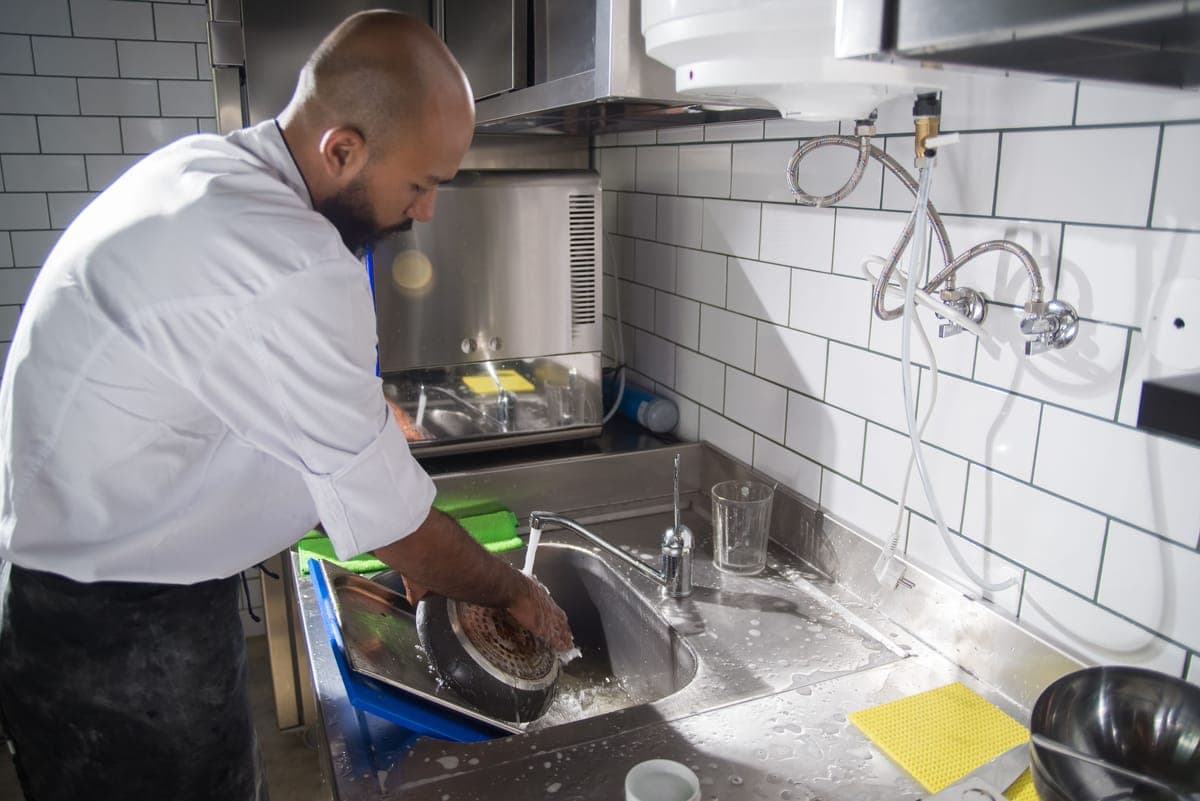
Can you refrigerate the parts instead?
People ask this, and it is worth answering plainly: putting assembled dirty juicer parts in the fridge keeps them cool but does not stop them drying, and you now have a juicer in your fridge. Submerging in water is strictly better and takes the same effort.
Machines that reduce the stakes
If this is a recurring battle, the machine can help. Two design approaches:
- No mesh screen at all. Hurom's Easy Clean range and Cuisinart's mesh-free CSJ-300. If there is no fine screen, there is nothing for pulp to dry into -- which removes the whole problem rather than easing it.
- Dishwasher-safe parts. Ninja states all removable parts on the JC151; Hamilton Beach and BLACK+DECKER state specific parts. The washing becomes the machine's problem, though a cycle is slow if you want the juicer again tomorrow.
The easiest juicers to clean ranks the field, and how to clean a juicer has the full routine.
Questions people ask
Do I have to clean my juicer after every use?
What happens if I do not clean my juicer straight away?
Which part must I clean immediately?
Can I just soak the parts and clean them later?
Can I put juicer parts in the fridge to deal with later?
Sources
Every figure on this page traces to one of these. Where a source does not publish a number, the page says “Not available” rather than estimating one.
- Hurom H400 Easy Clean — Strainer-free design - no mesh for pulp to dry into
- Ninja NeverClog JC151 — All removable parts stated dishwasher safe
Read next
Juicing Guides
Eighteen practical guides covering the habit, the criteria and the things that go wrong.
How to Clean a Juicer
The fast cleanup routine, plus stains, vinegar, dishwasher rules and the no-time fallback.
The Easiest Juicers to Clean
Four machines ranked on cleanup design, plus the specific features that genuinely cut washing time.
Why Is My Juicer Not Making Much Juice?
A diagnostic order for thin juice and wet pulp, from the screen outward.
How to Judge a Juicer's Cleanup Claims
A shopping checklist for cleanup claims, and what each brand's wording actually commits to.