Nama J2 vs Nama J3
Same 50 RPM auger, same 15-year parts cover, two very different batch sizes. The decision is how many glasses you pour.
By Brijon M. · Last reviewed October 5, 2026
We earn a commission if you buy through links on this page, at no extra cost to you. It does not change what we recommend or the order we rank things in. Full disclosure.
Buy the J3 if you pour one glass. Buy the J2 if you pour two or more. That really is the decision. Nama states the same 50 RPM auger speed and the same 15-year parts warranty on both machines, so this is not a quality ladder with a good model and a better model -- it is one juicing mechanism offered in two sizes, and picking the wrong size is how people end up resenting an expensive appliance.
| Criterion | Nama J2 | Nama J3 |
|---|---|---|
| Yield | Nama states 20-30 oz of juice per batch, depending on ingredientsManufacturer claim: Nama · checked 2026-10-02 | Nama states 10-15 oz of juice per batch, depending on ingredientsManufacturer claim: Nama · checked 2026-10-05 |
| Pulp | Not availableNot sourced | Not availableNot sourced |
| Cleanup time | Not available - no published cleanup time in minutesNot sourced | Nama states removable parts that rinse clean after juicing, with a cleaning brush included; no cleanup time publishedManufacturer claim: Nama · checked 2026-10-05 |
| Price | $400+Band from retailer listings, checked 2026-10-02 | $400+Band from retailer listings, checked 2026-10-02 |
| Noise | Not availableNot sourced | Nama states the J3 runs quietly; no decibel figure publishedManufacturer claim: Nama · checked 2026-10-05 |
| Speed | Nama states 50 RPM, single-phase induction motor, 200 WManufacturer claim: Nama · checked 2026-10-02 | Nama states 50 RPM and a rated power consumption of 130 WManufacturer claim: Nama · checked 2026-10-05 |
| Warranty | Nama states 15 years on the motor, 2 years on partsManufacturer claim: Nama · checked 2026-10-02 | Nama states a 15-year warranty for all partsManufacturer claim: Nama · checked 2026-10-05 |
What Nama publishes for each
| Nama J2 | Nama J3 | |
|---|---|---|
| Auger speed | 50 RPM | 50 RPM |
| Rated power | 200 W, single-phase induction | 130 W |
| Stated juice yield | 20-30 oz per batch, depending on ingredients | 10-15 oz per batch, depending on ingredients |
| Width x depth x height | 9.8 x 9.0 x 17.7 in | 8.9 x 6.5 x 15.4 in |
| Weight | 12.1 lb with chamber set | 9.7 lb |
| Parts in the box | 12 | 11 |
| Strainers included | Juice strainer and coarse strainer | Juice strainer and smoothie strainer |
| Warranty | 15 years, all parts | 15 years, all parts |
| Published cleanup time | Not available | Not available |
| Published pulp-dryness figure | Not available | Not available |
| Published decibel figure | Not available | Not available |
Four rows carry the whole decision: batch size, depth, rated power and the second strainer. The rest is either identical or unpublished on both machines, which is the normal state of affairs in this category and the reason this site judges on yield, pulp, cleanup and price rather than on spec sheets.
Batch size is the real difference
Nama is one of a very small number of juicer brands that publishes any volume figure at all, and the two figures are not close: 20-30 oz for the J2, 10-15 oz for the J3. A generous glass of juice is 12 to 16 oz. So the J3 is a one-glass machine by design, and the J2 is a two-glass machine with headroom.
That matters more than it sounds, because a cold press is not a machine you top up. When a batch is done you empty the pulp container, and on a vertical that generally means lifting the chamber off. Running a second batch is not a second pour -- it is most of the process again. A household of two juicing on a J3 will do that every morning, and the resentment builds quickly.
Run it the other way and a single person pouring one 14 oz glass on a J2 is washing a bigger chamber, a hopper and a hopper lid to fill the same glass. How much celery for one cup of juice gives a sense of the produce volume sitting behind each of those numbers.
Footprint: 6.5 inches deep is the headline
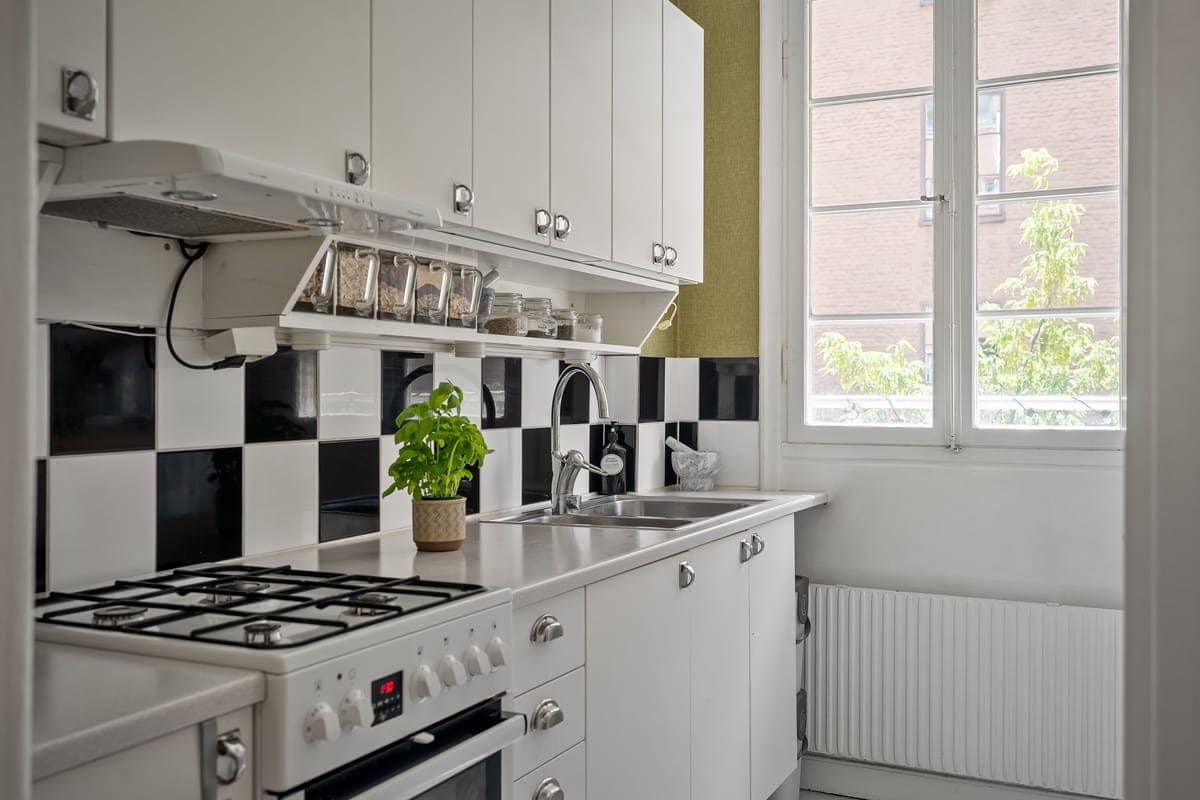
Nama states 8.9 in wide, 6.5 in deep, 15.4 in high and 9.7 lb for the J3, against 9.8 x 9.0 x 17.7 in and 12.1 lb for the J2. The width difference is trivial. The depth difference is not: 6.5 in sits on a standard counter without crowding the backsplash, and 2.5 in of reclaimed depth is often the difference between a machine that lives out and a machine that lives in a cupboard.
Height matters for a different reason. Both machines are top-fed, so you need clearance above the stated height to drop produce in. At 15.4 in the J3 clears a typical 18 in counter-to-cabinet gap with a little room; at 17.7 in the J2 does not, and you will be pulling it forward to load it. Measure before you buy -- juicer size and storage covers how to measure it properly.
130 W against 200 W: what it does and does not tell you
The J3's rated power consumption is 130 W; the J2's is 200 W. Both turn the auger at 50 RPM, so the difference is not speed -- it is how much torque the motor can hold under load before it stalls.
Nama publishes no torque figure, no stall rating and no load test for either machine, so what follows is reasoning from the published numbers rather than a measurement: a lower-powered motor turning the same auger at the same speed has less margin when it is fed hard, fibrous produce quickly. Carrots, beets and a dense wad of celery are where that margin gets used. It does not mean the J3 cannot juice them; it means the J3 is less forgiving of being fed fast, which is the commonest beginner mistake. Juicer clogging fixes is the technique for avoiding it on either machine.
The hopper, and what hands-free actually means here
Nama built the J2's reputation on the hopper: load it, start it, leave the kitchen. The J3 also has a hopper, and Nama's own J3 copy is careful about it -- it describes loading the hopper with just a little prep, and says the wide hopper means many fruits and vegetables go in whole or roughly chopped. It is an opening you fill rather than a tube you stand and push produce down, which is the structural advantage of any vertical.
If being able to walk away is the specific thing you are buying, read Nama's J2 page and J3 page yourself before deciding -- both are linked at the foot of this page. Our reading of the two is that the J2 is the machine Nama markets on that promise and the J3 is the machine Nama markets on size.
The second strainer tells you who each machine is for
Nama ships the J2 with a juice strainer and a coarse strainer: two densities of juice, with the coarse screen giving a heavier, more textured glass. The J3 ships with a juice strainer and a smoothie strainer: juice, or a thick blended output.
That is a positioning choice rather than an accident. The J2's second screen serves somebody who juices a lot and wants control over the texture of the juice. The J3's second screen serves somebody making a single thick drink or a wellness shot. If a daily green juice is the plan, both machines do it with their primary screen and the second screen is a bonus either way. For the difference between what a juicer and a blender actually produce, see juicer vs blender.
Warranty: effectively a wash
Nama's J3 page states a 15-year warranty for all parts. Nama's J2 warranty page, read on 5 October 2026, states 15 years covering both the motor and the component parts. On the terms as published today there is nothing to choose between them, which is unusual -- 15 years is the top of this category, where Breville, Ninja and Nutribullet give one year.
One caution worth acting on: Nama's published warranty wording has not been consistent across its own pages over time, and both terms are limited warranties with conditions attached. Read the warranty page for the model you are buying, from the seller you are buying from, on the day you buy it. How long does a juicer last lists every warranty term on this site alongside what each one actually covers.
Buy the Nama J3 if
- You juice for one. 10-15 oz per batch is one glass, and that is the machine's entire design brief.
- Counter depth is tight. 6.5 in against 9.0 in, and 15.4 in high against 17.7 in.
- Wellness shots are part of the plan. Ginger and turmeric shots are two-ounce outputs, where batch capacity is irrelevant -- see best juicers for ginger shots.
- You want the same auger speed and the same warranty term for less money. Both sit in the $400+ band, with the J3 the cheaper of the two.
Buy the Nama J2 if
- You juice for two or more people. 20-30 oz per batch is the difference between one run and two every morning.
- Walking away from the machine is the feature you are paying for. The hands-free hopper is what Nama built this model's reputation on.
- You juice hard produce daily. 200 W has more margin under a load of carrots and beets than 130 W does.
- You want texture control on the juice itself. The coarse strainer is the J2's second screen; the J3's second screen is for smoothies.
Neither, if cleanup is your real objection
Both machines have a chamber, an auger and a mesh strainer to wash after every use, and neither has meaningfully fewer parts than the other -- 12 against 11. If the thing that ended your last juicing habit was the washing up rather than the juicing, the structural answer is a strainer-free design such as Hurom's H400, or a mid-band machine with dishwasher-safe parts. Easiest juicers to clean ranks everything on this site by that criterion alone.
And if you have not settled on a premium vertical at all, how to choose your first juicer starts further back, while are expensive juicers worth it answers the question these two price tags raise.
The picks in full
1. Our verdict for most single-household buyers: the J3
Nama J3
Nama J3 · $400+ · Our score 7.9/10
Because what people actually regret about a premium vertical is the counter space and the washing up, not the juice. Nama states the same 50 RPM auger as the J2, the same 15-year warranty for all parts, and a body 8.9 in wide by 6.5 in deep by 15.4 in high at 9.7 lb -- small enough to leave out, which is the strongest practical predictor of whether a juicer keeps getting used. The limit is published and it is real: 10-15 oz per batch. One glass. If you juice for two people the J2's 20-30 oz is the right machine and this is the wrong one.
- Yield
- Nama states 10-15 oz of juice per batch, depending on ingredientsManufacturer claim: Nama · checked 2026-10-05
- Pulp
- Not availableNot sourced
- Cleanup time
- Nama states removable parts that rinse clean after juicing, with a cleaning brush included; no cleanup time publishedManufacturer claim: Nama · checked 2026-10-05
- Speed
- Nama states 50 RPM and a rated power consumption of 130 WManufacturer claim: Nama · checked 2026-10-05
What works
- 8.9 x 6.5 x 15.4 in and 9.7 lb per Nama - the smallest machine in the premium band
- 15 years on all parts, stated without a motor-versus-parts split
- Ships with a smoothie strainer as well as a juice strainer
What does not
- 10-15 oz per batch, against 20-30 oz on the J2
- 130 W, the lowest rated power of anything in this price band
- Nama publishes no pulp-dryness figure and no cleanup time
Skip this if: You juice for more than one person. Nama states 10-15 oz per batch, which is one glass, so a household means running it again.
Representative photo. We have no manufacturer image library, so this is a licensed stock photo of the category, not a photo of this unit.
- Yield8/10
- Pulp8/10
- Cleanup8/10
- Value7/10
- Quiet9/10
2. Buy this one instead if you juice for a household
Nama J2
Nama J2 · $400+ · Our score 8.0/10
Nama states 20-30 oz per batch depending on ingredients -- double the J3's stated batch -- from a 200 W single-phase induction motor at the same 50 RPM, and this is the model Nama markets as the hands-free one: you fill the hopper, start it and walk away rather than feeding produce in. It is bigger in every dimension (9.8 x 9.0 x 17.7 in, 12.1 lb) and there are 12 parts in the box against 11. Skip it if one glass a morning is the whole plan, because you would be paying for hopper capacity you never fill and washing a larger chamber to fill the same glass.
- Yield
- Nama states 20-30 oz of juice per batch, depending on ingredientsManufacturer claim: Nama · checked 2026-10-02
- Pulp
- Not availableNot sourced
- Cleanup time
- Not available - no published cleanup time in minutesNot sourced
- Speed
- Nama states 50 RPM, single-phase induction motor, 200 WManufacturer claim: Nama · checked 2026-10-02
What works
- Hands-free hopper means you are not feeding it piece by piece
- Longest motor warranty in its price class on paper (15 years)
- Low 50 RPM, which is the slow end of vertical cold press
What does not
- Among the most expensive machines we cover
- Nama publishes no cleanup time and no pulp-dryness figure
- Parts warranty is 2 years, far shorter than the motor's 15
Skip this if: You juice a single glass occasionally — you will pay for a hopper and an auto-feed you never use, and still wash the same number of parts.
Representative photo. We have no manufacturer image library, so this is a licensed stock photo of the category, not a photo of this unit.
- Yield9/10
- Pulp8/10
- Cleanup8/10
- Value6/10
- Quiet9/10
Questions people ask
Is the Nama J3 better than the J2?
What is the main difference between the Nama J2 and J3?
Does the Nama J3 juice as well as the J2?
Is the Nama J3 hands-free like the J2?
Which Nama is better for celery juice?
Why does this page not show the price of either juicer?
Sources
Every figure on this page traces to one of these. Where a source does not publish a number, the page says “Not available” rather than estimating one.
- Nama J2 cold press juicer — 50 RPM, 200 W, 20-30 oz per batch, 9.8 x 9.0 x 17.7 in, 12.1 lb, 12 parts, juice and coarse strainers
- Nama J3 cold press juicer — 50 RPM, 130 W, 10-15 oz per batch, 8.9 x 6.5 x 15.4 in, 9.7 lb, 11 parts, juice and smoothie strainers, 15-year warranty for all parts
- Nama J2 warranty — 15 years on the motor and 15 years on component parts, as stated on 5 October 2026
Read next
Nama J2 vs Hurom H400
Hands-free feeding against strainer-free cleaning, at similar premium prices.
Kuvings REVO830 vs Nama J2
A dual-chute design against a hands-free hopper, both at the top of the price range.
Nama J2 Review
The hands-free premium vertical: what the hopper solves, and the 2-year parts warranty worth knowing about.
The Best Vertical Slow Juicers
Four vertical cold press machines, the shape that suits most real kitchens.
The Best Compact Juicers
Small-footprint juicers with the actual published dimensions, for kitchens where counter space decides everything.