Juicer Size and Storage
Three measurements, taken before you order. The one people forget is the height above the counter.
By Brijon M. · Last reviewed October 2, 2026
The strongest predictor of whether a juicer keeps getting used is whether using it requires lifting it out of a cupboard first. So size is not a secondary consideration -- for a lot of kitchens it is the deciding one, and it comes down to three measurements most people do not take.
The three measurements
1. Counter width and depth
Obvious, and still worth doing with a tape measure rather than by eye. A horizontal masticating machine is wide: Omega publishes 19.22 in for the NC900HDC, and Tribest 18.6 in for the Greenstar Pro. You also need clear space to the side of a horizontal machine, because you feed produce along the auger rather than dropping it in.
2. Height to the underside of your wall cabinet
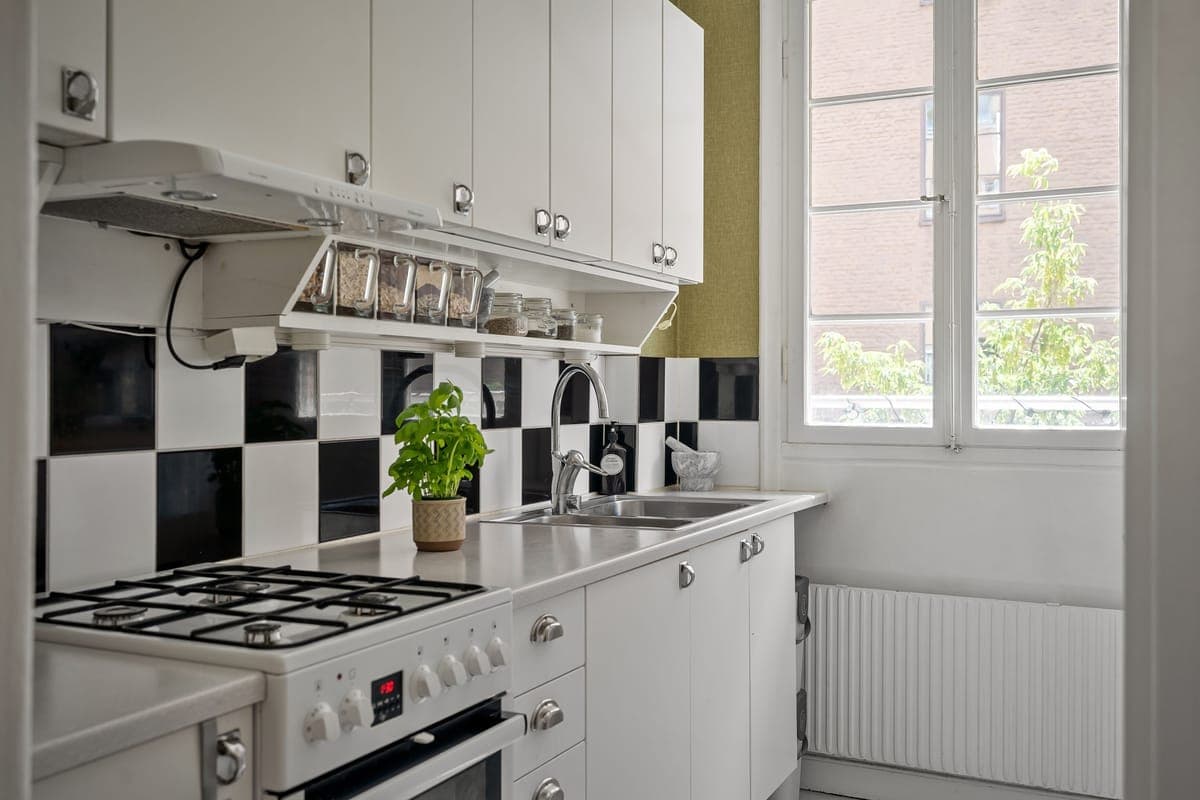
This is the one people forget, and it is the most common vertical-juicer regret. A vertical machine is tall -- Nutribullet states 17 in assembled and Hurom 471 mm, about 18.5 in -- and you need room above that to drop produce into the chute.
Standard clearance between a counter and a wall cabinet is often around 18 in. So a 17 in machine technically fits and may be unusable there, because you cannot get a carrot into the top of it. Measure the gap, then subtract the machine height, and ask whether what is left is enough to hold a piece of produce.
3. Weight, if it will be stored
Omega publishes 18.7 lb for the NC900HDC and Tribest 27 lb for the Greenstar Pro. Nobody lifts those in and out of a cupboard twice a day, which means they live on the counter whether you planned that or not.
At the other end, Nama states 12.1 lb and Hurom 14.8 lb -- both genuinely liftable. BLACK+DECKER's 9 x 9 x 13 in centrifugal machine is the only one we cover that honestly disappears into a cupboard.
The published dimensions
| Machine | Dimensions | Weight | Source |
|---|---|---|---|
| Nutribullet Slow Juicer | 17 in H x 6.25 in W x 7 in D | Not published | Nutribullet |
| BLACK+DECKER JE2200B | 9 x 9 x 13 in | Not published | BLACK+DECKER |
| Nama J2 | 9.8 x 9.0 x 17.7 in | 12.1 lb | Nama |
| Hurom H400 | 6.6 x 10.3 x 18.5 in | 14.8 lb | Hurom |
| Breville JE98XL | 13¼ x 16½ x 18¼ in | 10 lb | Breville |
| Ninja NeverClog JC151 | 12.11 x 7.15 x 15.93 in | Not published | Ninja |
| Hamilton Beach Big Mouth | 14.41 x 7.8 x 11.46 in | Not published | Hamilton Beach |
| Omega NC900HDC | 19.22 x 7.25 x 12.96 in | 18.7 lb | Omega |
| Tribest Greenstar Pro | 18.6 x 6.8 x 12.4 in | 27 lb | Tribest |
| Dash DCSJ255 | Not published | Not published | Dash |
What small costs you
- Capacity, mostly. BLACK+DECKER's pitcher is 10 oz, Dash's cup is 20 oz, Nutribullet's is 24 oz. A decent glass is 12 to 16 oz, so on the smallest you are emptying mid-session every time.
- Power, sometimes. Dash's 130 W is the lowest in our registry. Fine for greens and soft produce, working hard on a daily carrot habit.
- Not cleanup, interestingly. Fewer and smaller parts is genuinely less washing, so compact machines tend to do well on the criterion that most determines habit survival.
If it has to be stored
Accept that it will be used less, and plan around it. Pick something light -- under about 15 lb -- and with few parts, so assembly is not a second obstacle. Keep it somewhere you can reach without moving other things, because every additional step reduces the frequency.
Or reconsider the shape of the habit: a stored juicer used twice a week for batches is a better outcome than a stored juicer intended for daily use and used monthly. How long fresh juice lasts covers whether batching works.
The alternative if space is the binding constraint
If citrus is most of what you want, skip the category. A hand squeezer lives in a drawer, takes no counter space at all, washes in seconds and outlasts several electric juicers. Best manual citrus juicers covers them, and it is a genuinely better answer for a small kitchen than a compromised small juicer.
Machines sized for small kitchens
1. Smallest real cold press
Nutribullet Slow Juicer
Nutribullet NBJ50300 · $100–200 · Our score 7.4/10
Nutribullet publishes the dimensions, which many brands do not: 17 in high x 6.25 in wide x 7 in deep assembled, at 65 RPM and 150 W with a reverse function. That is roughly the footprint of a tall kettle and the narrowest genuine cold press machine we cover. A 24 oz cup is the trade.
- Yield
- Not availableNot sourced
- Pulp
- Not availableNot sourced
- Cleanup time
- Not available - no published cleanup time in minutesNot sourced
- Speed
- Nutribullet states 65 RPM, 150 W, with a reverse functionManufacturer claim: Nutribullet · checked 2026-10-02
What works
- Cold press mechanics at a centrifugal-adjacent price
- Reverse function, which is how you clear a celery jam
- Small footprint at 17 in tall and 6.25 in wide
What does not
- 1-year warranty against 15 years on the premium verticals
- 24 oz catch cup forces breaks on bigger batches
- No published yield, pulp or cleanup figures
Skip this if: You juice for more than one person. A 24 oz container means stopping and emptying mid-session.
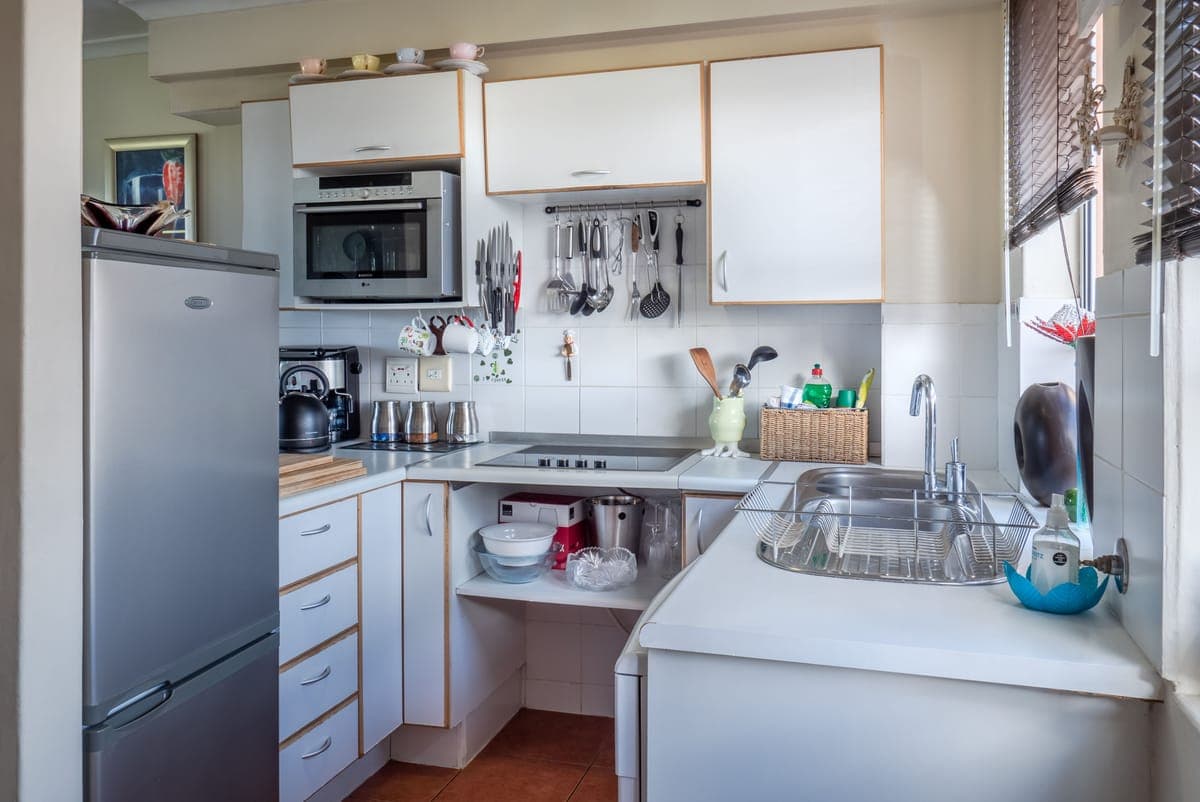
Representative photo. We have no manufacturer image library, so this is a licensed stock photo of the category, not a photo of this unit.
- Yield7/10
- Pulp7/10
- Cleanup7/10
- Value9/10
- Quiet8/10
2. Smallest machine overall
BLACK+DECKER JE2200B
BLACK+DECKER JE2200B · Under $100 · Our score 5.5/10
BLACK+DECKER states 9 x 9 x 13 in with dishwasher-safe collector, pitcher, blades and strainer, 400 W and a 2-year warranty. Small enough to genuinely live in a cupboard. The 10 oz pitcher is less than one glass, and 400 W struggles with hard produce.
- Yield
- Not availableNot sourced
- Pulp
- Not availableNot sourced
- Cleanup time
- BLACK+DECKER states the collector, pitcher, blades and strainer are removable and dishwasher safeManufacturer claim: BLACK+DECKER · checked 2026-10-02
- Speed
- BLACK+DECKER states 400 W; no RPM publishedManufacturer claim: BLACK+DECKER · checked 2026-10-02
What works
- Cheapest route to a glass of fresh juice
- Dishwasher-safe parts
- Small enough to store in a cupboard
What does not
- 400 W struggles with hard carrots and beets
- 10 oz pitcher means emptying constantly
- No yield, pulp or cleanup data published
Skip this if: You juice daily, or you juice hard produce. 400 W and a 10 oz pitcher are a trial setup, not a habit setup.
Representative photo. We have no manufacturer image library, so this is a licensed stock photo of the category, not a photo of this unit.
- Yield4/10
- Pulp4/10
- Cleanup7/10
- Value8/10
- Quiet4/10
3. Built for tight kitchens
Dash Deluxe Compact Masticating Juicer
Dash DCSJ255 · $100–200 · Our score 6.8/10
A machine whose premise is footprint, with a frozen-dessert attachment and a warranty that extends from 1 to 2 years on registration. Worth flagging: Dash publishes no dimensions on the pages we checked, which for a compact juicer is an odd omission, and 130 W is the weakest motor in our registry.
- Yield
- Not availableNot sourced
- Pulp
- Not availableNot sourced
- Cleanup time
- Not available - no published cleanup time in minutesNot sourced
- Speed
- Dash states 130 W; no RPM publishedManufacturer claim: Dash (StoreBound) · checked 2026-10-02
What works
- Genuinely small - the footprint is the feature
- Frozen-dessert attachment included
- The second warranty year is free if you register it
What does not
- 130 W is the weakest motor in this registry
- 20 oz cup is small
- No RPM published, so it cannot be compared on speed
Skip this if: You juice hard carrots and beets daily. 130 W is the least power of any masticating machine here.
Representative photo. We have no manufacturer image library, so this is a licensed stock photo of the category, not a photo of this unit.
- Yield6/10
- Pulp7/10
- Cleanup7/10
- Value7/10
- Quiet8/10
Questions people ask
What is the smallest juicer worth buying?
Will a juicer fit under my kitchen cabinets?
How much counter space does a juicer need?
Should I store my juicer or leave it out?
Do compact juicers work as well?
Sources
Every figure on this page traces to one of these. Where a source does not publish a number, the page says “Not available” rather than estimating one.
- Nutribullet Slow Juicer — 17 in H x 6.25 in W x 7 in D assembled, 24 oz container
- Omega NC900HDC specifications — 19.22 x 7.25 x 12.96 in, 18.7 lb
- Hurom H400 Easy Clean — 169 x 261 x 471 mm, 6.7 kg
- Tribest Greenstar Elite — 18.6 x 6.8 x 12.4 in, 27 lb
Read next
Juicing Guides
Eighteen practical guides covering the habit, the criteria and the things that go wrong.
The Best Compact Juicers
Small-footprint juicers with the actual published dimensions, for kitchens where counter space decides everything.
The Best Manual Citrus Juicers
Hand squeezers and reamers: the right answer for a few lemons a week, and useful even if you own a machine.
How to Choose Your First Juicer
A five-question decision process, in the order that avoids the expensive mistakes.
Nutribullet Slow Juicer Review
Real cold press mechanics at the bottom of the price range, with a reverse function and a tiny footprint.