Why Is My Juicer So Loud?
If it has always been loud, that is the mechanism. If it got loud, something changed -- and six things cause that, in this order.
By Brijon M. · Last reviewed October 10, 2026
First, separate two different questions. If your juicer has always been loud, that is the mechanism and not a fault -- a centrifugal machine spins a basket at thousands of RPM and nothing will quieten it. If it became loud, something changed, and the six causes below are in order of likelihood. The most common by a wide margin is the first one: a part that is not seated the way it was.
How loud is normal for your machine type
There is no published decibel data to compare machines with. One brand on this entire site states a figure -- AMZCHEF's below 60 decibels -- and two others make a relative claim with no number: Breville says noise-reduction technology cuts mechanical noise by 40 percent on the Juice Fountain Cold XL, and Kuvings describes the REVO830's motor as noise-reduction. That is the complete published record, and anything else you read comparing juicer decibel levels is somebody's estimate.
What is published is speed, and speed predicts noise better than any other available figure:
| Machine | Published speed | What to expect |
|---|---|---|
| Omega VSJ843 | 43 RPM, 150 W | The quietest mechanism here by speed |
| Nama J2 / J3 | 50 RPM | Nama states the J3 runs quietly; no figure |
| Kuvings REVO830 / AUTO10 | 50 RPM, 240 W | Noise-reduction motor claimed; no figure |
| Nutribullet Slow Juicer | 65 RPM, 150 W | Low-speed auger |
| Hurom H400 | 90 RPM, 150 W | Faster auger, still an auger |
| AMZCHEF ZM1501 | 90 RPM, 150 W | States operation below 60 decibels |
| Tribest Greenstar Pro | 110 RPM, 200 W | Fastest auger here |
| Breville JE98XL | 6,500 / 12,000 RPM, 850 W | Loud by mechanism |
| Mueller Austria Ultra | 12,000-18,000 RPM, 1100 W | The loudest figure in this registry |
Six causes, most likely first
- 1.A part is not fully seated. The bowl, screen, lid or auger has gone back together slightly off, so something is contacting something it should not. This is by far the most common cause of a juicer that got louder, and the fix is to strip it and reassemble carefully. Most machines have a locating mark or arrow -- line it up rather than twisting until it catches.
- 2.The screen is packed. A blinded screen makes the motor labour, and a labouring motor is louder and lower-pitched. If the noise is a deeper hum rather than a rattle, this is the likely cause. Rinse, brush it from the outside in, and see juicer clogging fixes.
- 3.Something hard is in the chamber. An apple pip, a cherry stone, a piece of avocado skin, a date stone. On a centrifugal machine this is a sharp intermittent clatter; on an auger it is a crunch followed by a change in pitch. Stop immediately, strip and look -- running on is how a screen gets cut.
- 4.The machine is not level, or it is on a resonant surface. A juicer on a hollow counter or a thin wooden board transmits motor hum into the surface, which acts as a soundboard. A silicone mat under the machine is a genuinely effective fix and costs almost nothing.
- 5.A seal or gasket has hardened. Silicone seals stiffen with age and heat, and a seal that no longer compresses evenly lets parts move slightly under load. This shows up as a buzz or vibration rather than a clatter, and it often comes with a leak -- see why is my juicer leaking.
- 6.It really is the motor or the bearings. The least likely and the most expensive. A bearing on the way out makes a dry whine or grinding that is the same whether or not produce is going through, and gets worse rather than varying. If the noise is present with the machine running empty and clean, this is what you are hearing -- check the warranty before anything else, because the terms on this site run from 1 year to 15.
The picks in full
1. The only published decibel figure on this site
AMZCHEF ZM1501
AMZCHEF ZM1501 · Under $100 · Our score 7.1/10
If noise is the reason you are reading this, there is exactly one machine on this site whose brand commits to a number: AMZCHEF states operation below 60 decibels, alongside 90 RPM, 150 W and a reverse function. That is not a test result we verified, it is the manufacturer's claim -- but it is the only one in the category, and in a category where everybody else says "quiet" without a figure, that is worth something. The trade is build and paperwork: warranty terms differ between the brand store and third-party listings, and the chute is small so prep is heavy.
- Yield
- AMZCHEF markets seven spiral masticators for maximum yield; no numeric figure is publishedManufacturer claim: AMZCHEF · checked 2026-10-02
- Pulp
- Not availableNot sourced
- Cleanup time
- Not available - no published cleanup time in minutesNot sourced
- Speed
- AMZCHEF states 90 RPM, 150 W, with a reverse functionManufacturer claim: AMZCHEF · checked 2026-10-02
What works
- Masticating mechanics under $100
- One of very few machines at any price that publishes a decibel figure
- Reverse function for clearing jams
What does not
- Warranty terms differ between the brand store and third-party listings - read the one you buy from
- Small chute, so prep is heavy
- No yield or cleanup figure published
Skip this if: You expect premium build. At this price the warranty is short and the parts are light - treat it as a trial machine.
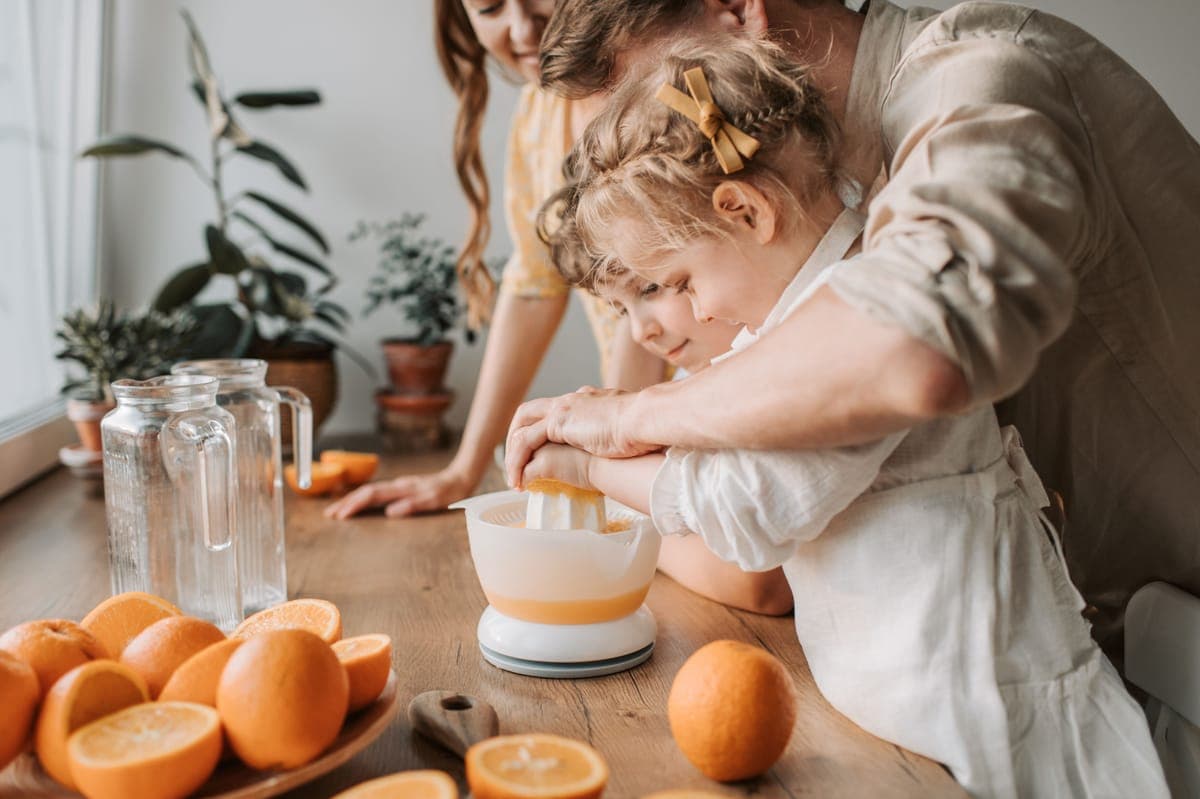
Representative photo. We have no manufacturer image library, so this is a licensed stock photo of the category, not a photo of this unit.
- Yield7/10
- Pulp7/10
- Cleanup6/10
- Value9/10
- Quiet9/10
2. Slowest machine here, and speed is the honest proxy
Omega VSJ843
Omega VSJ843 · $400+ · Our score 8.0/10
Nobody publishes decibels for the premium verticals, so speed is the only published number that predicts noise -- and this is the slowest machine on this site. Omega states 43 RPM, a dual-edge single auger and 150 W, with a 15-year limited warranty. At 43 RPM there is simply less happening per second than in any other machine here, and a centrifugal juicer can reach 18,000. Skip it if you want speed in the morning: 43 RPM is deliberate and it feels deliberate when you are late for work.
- Yield
- Not availableNot sourced
- Pulp
- Not availableNot sourced
- Cleanup time
- Not available - no published cleanup time in minutesNot sourced
- Speed
- Omega states 43 RPM, dual-edge single auger, 150 WManufacturer claim: Omega Juicers · checked 2026-10-02
What works
- Slowest published speed here at 43 RPM
- Juice tap lets you mix in the bowl and stops the drip
- 15-year limited warranty
What does not
- Narrow feed opening - prep is unavoidable
- Slow by design, so throughput is low
- No published yield, pulp or cleanup figure
Skip this if: You want speed in the morning. 43 RPM is deliberate and it feels deliberate when you are late for work.

Representative photo. We have no manufacturer image library, so this is a licensed stock photo of the category, not a photo of this unit.
- Yield9/10
- Pulp9/10
- Cleanup7/10
- Value6/10
- Quiet9/10
3. Quiet claim plus single-serve sizing
Nama J3
Nama J3 · $400+ · Our score 7.9/10
Nama states the J3 runs quietly -- with no decibel figure published, which we flag rather than gloss -- alongside 50 RPM, a rated 130 W, 10 to 15 oz of juice per batch, and a 15-year warranty on all parts. The reason it belongs on a noise page is the combination: a slow machine making one glass runs for a short time as well as at a low speed, and total noise is duration times level. Skip it if you juice for more than one person, because 10 to 15 oz is a single glass.
- Yield
- Nama states 10-15 oz of juice per batch, depending on ingredientsManufacturer claim: Nama · checked 2026-10-05
- Pulp
- Not availableNot sourced
- Cleanup time
- Nama states removable parts that rinse clean after juicing, with a cleaning brush included; no cleanup time publishedManufacturer claim: Nama · checked 2026-10-05
- Speed
- Nama states 50 RPM and a rated power consumption of 130 WManufacturer claim: Nama · checked 2026-10-05
What works
- 8.9 x 6.5 x 15.4 in and 9.7 lb per Nama - the smallest machine in the premium band
- 15 years on all parts, stated without a motor-versus-parts split
- Ships with a smoothie strainer as well as a juice strainer
What does not
- 10-15 oz per batch, against 20-30 oz on the J2
- 130 W, the lowest rated power of anything in this price band
- Nama publishes no pulp-dryness figure and no cleanup time
Skip this if: You juice for more than one person. Nama states 10-15 oz per batch, which is one glass, so a household means running it again.
Representative photo. We have no manufacturer image library, so this is a licensed stock photo of the category, not a photo of this unit.
- Yield8/10
- Pulp8/10
- Cleanup8/10
- Value7/10
- Quiet9/10
Why a centrifugal juicer cannot be made quiet
It is worth being blunt about this, because a lot of people buy a cheap fast machine and then search for a way to quieten it. A centrifugal juicer works by spinning a cutting basket at high speed: Breville states 6,500 and 12,000 RPM on the JE98XL, and Mueller states up to 18,000 RPM on the Austria Ultra. Air moving over a basket at that speed is a siren, and the cutting disc hitting hard produce is an impact. Neither is a fault and neither is adjustable.
The useful mitigations are modest: run the low speed if the machine has two, put a silicone mat underneath, and do not juice at 6am through a shared wall. If quiet actually matters, the fix is an auger machine -- quietest juicers is the page for that, and it is honest about how little published data exists.
Noises that are normal and worth not worrying about
- A rhythmic thump on an auger machine as hard produce goes in. That is the auger gripping and crushing. It should match the rate you are feeding.
- A change in pitch when the chamber fills. The motor is under load. It should return when the chamber clears.
- A brief squeal on a dry machine at startup. Seals against a dry bowl. It stops once juice wets them, and it is one reason not to run the machine empty for long.
- Crunching on an apple pip. Unpleasant, and not usually damaging on an auger machine. On a centrifugal machine it is worth avoiding -- the disc is a cutting edge.
Where to go next
If the noise came with a drop in juice, juicer not making much juice is the page that pairs with this one. If the machine has stopped altogether, juicer not turning on covers the thermal cutout that most often causes it. And if you are shopping specifically for quiet, quietest juicers sets out what can actually be known.
Questions people ask
Why is my juicer suddenly so loud?
How loud should a juicer be?
Why is my centrifugal juicer so loud?
Can you make a juicer quieter?
Is a grinding noise from a juicer serious?
Which juicer is the quietest?
Sources
Every figure on this page traces to one of these. Where a source does not publish a number, the page says “Not available” rather than estimating one.
- AMZCHEF ZM1501 Slow Masticating Juicer — States operation below 60 decibels, 90 RPM, 150 W, reverse function
- Omega VSJ843 — 43 RPM, dual-edge single auger, 150 W, 15-year limited warranty
- Nama J3 — States the J3 runs quietly with no decibel figure; 50 RPM, rated 130 W, 15-year warranty on all parts
- Breville Juice Fountain Cold XL — Claims noise-reduction technology cuts mechanical noise by 40 percent; no decibel figure published
- Mueller Austria Juicer Ultra — Dual speed 12,000-15,000 RPM low and 15,000-18,000 RPM high, 1100 W
Read next
How Loud Is a Juicer, Really?
What the industry publishes about juicer noise (almost nothing), what predicts it, and how to juice quietly.
Juicer Clogging Fixes
Why fibrous produce jams an auger, how to prevent it, and which features actually help.
Juicer Not Turning On?
Six causes of a dead juicer, in the order to check them, plus what to do when it really is the motor.
Why Is My Juicer Leaking?
Seven causes of a leaking juicer in order of likelihood, diagnosed by where the juice appears, and the seal rule that prevents most of them.