Do Juicers Remove Fiber?
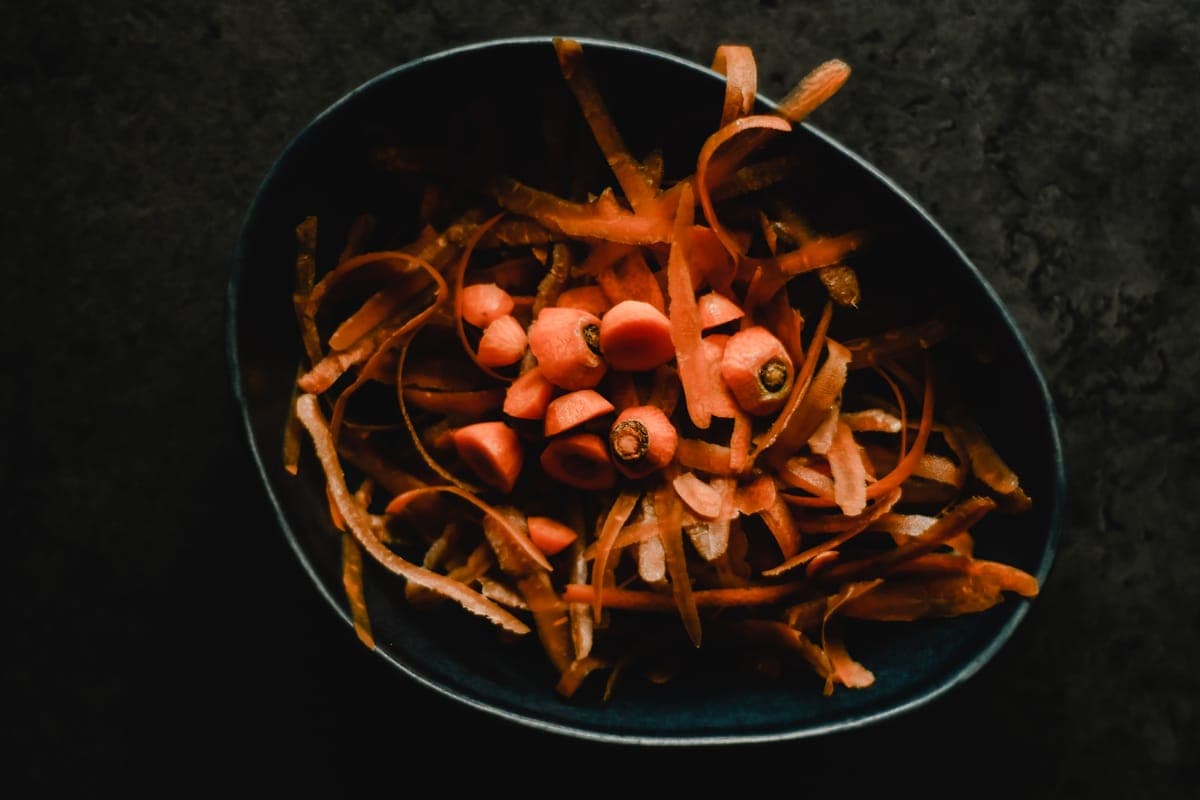
Most of it, and you can see exactly where it went. The pulp container is the fiber. What stays in the glass is the part you cannot see.
By Brijon M. · Last reviewed October 17, 2026
Yes -- a juicer removes most of the fiber, and the pulp container is where it went. That is the honest mechanical answer, and the useful detail sits one layer down: what a juicer removes is the insoluble fiber, the structural material that holds a plant up. Some soluble fiber, which dissolves into the liquid, comes through into the glass, along with whatever fine particles the screen lets past. That is why fresh juice is cloudy rather than clear.
Where the fiber actually goes
Both mechanisms separate a plant into two streams, and both put the bulk of the structural fiber into the same place:
- In an auger machine, the screw drags produce into a narrowing chamber and crushes it against a mesh screen. Liquid goes through the mesh; the crushed fibrous mat keeps travelling and is pushed out of a separate opening as pulp. The screen mesh is what decides how much fine material follows the liquid.
- In a centrifugal machine, a flat blade shreds produce against the base of a spinning basket and centrifugal force throws the liquid out through the basket wall. The shredded fiber stays in the basket or is ejected into a bin. Because the shredding is violent, more of the fiber is reduced to particles small enough to pass the mesh -- which is why centrifugal juice is cloudier.
So the fiber is not destroyed and it is not transformed. It is sorted, and you can hold the sorted result in your hand. Juicer pulp explained goes into what the pulp actually is, and what to do with juicer pulp covers using it rather than binning it.
Soluble and insoluble, briefly and mechanically
| Insoluble fiber | Soluble fiber | |
|---|---|---|
| What it is | Structural plant material - cellulose, the stringy part of celery, apple skin | Material that dissolves or disperses into water |
| Where it ends up | The pulp container, almost entirely | Partly in the juice, partly held in the pulp |
| Can you see it? | Yes - the pulp bin is full of it | No - it is in solution in the glass |
| Does machine choice change it? | Only at the margins, via screen mesh | Barely |
The one honest caveat: nobody publishes a number here. No juicer manufacturer measures the fiber content of the juice its machines produce, and no published test compares machines on it. So "most of the insoluble fiber" is as precise as the available evidence allows, and anyone quoting a percentage for a specific juicer generated it.
A blender removes none of it
This is the comparison the question is usually really about. A blender has no screen and no separation stage -- it breaks the entire plant down and keeps all of it in the jug. Nothing is removed, which is why a smoothie is thick and a juice is not. A juicer's defining feature is the separation; a blender's defining feature is the absence of it.
That is a mechanical difference with no "better" attached to it from us, and it is the main reason this site tells some people to buy a blender instead of a juicer. Juicer vs blender and juice vs smoothie are the two pages that work through which appliance suits which plan, and juicer vs vitamix covers the specific machine people usually mean.
What to look for if you want more fiber in the glass
If the point of the question is to keep more fiber, the specification to look for is pulp control -- a coarser screen, a second filter, or an adjustable pressure setting. Four machines on this site publish one:
- 1.Omega NC900HDC -- Omega states five adjustable end-cap pressure settings and two juicing screens at 80 RPM on 150 W. Coarse screen plus low pressure is the most fiber this site can point to from a published setting, and it is the most flexible machine here.
- 2.Ninja NeverClog JC151 -- Ninja states two pulp filters, for less pulp or more pulp, plus 150 W and dishwasher-safe removable parts. The cheapest explicit more-pulp option.
- 3.Cuisinart Pulp Control Citrus Juicer -- Cuisinart states three pulp control settings: low, medium and high, with a limited 3-year warranty. For orange and grapefruit juice specifically.
- 4.Breville Citrus Press Pro 800CPXL -- Breville states adjustable pulp control on a powered lever press, at 110 W with four dishwasher-safe parts.
Three machines that let you choose
| Criterion | Omega NC900HDC | Ninja NeverClog JC151 | Cuisinart Pulp Control Citrus Juicer |
|---|---|---|---|
| Yield | Omega markets high juice yield and five pressure settings; no numeric yield figure is publishedManufacturer claim: Omega Juicers · checked 2026-10-02 | Not availableNot sourced | Not availableNot sourced |
| Pulp | Five adjustable pressure settings and two juicing screens, per OmegaManufacturer claim: Omega Juicers · checked 2026-10-02 | Ninja states two pulp filters, for less pulp or more pulpManufacturer claim: Ninja · checked 2026-10-02 | Cuisinart states three pulp control settings: low, medium and highManufacturer claim: Cuisinart · checked 2026-10-02 |
| Cleanup time | Not available - no published cleanup time in minutesNot sourced | Ninja states the removable parts are dishwasher safe; no cleanup time publishedManufacturer claim: Ninja · checked 2026-10-02 | Not available - no published cleanup time in minutesNot sourced |
| Price | $200–400Band from retailer listings, checked 2026-10-02 | $100–200Band from retailer listings, checked 2026-10-02 | Under $100Band from retailer listings, checked 2026-10-02 |
| Speed | Omega states 80 RPM and 150 W outputManufacturer claim: Omega Juicers · checked 2026-10-02 | Ninja states 150 W; no RPM publishedManufacturer claim: Ninja · checked 2026-10-02 | Not available - Cuisinart publishes no wattage or RPM for this modelNot sourced |
| Warranty | Omega states a 15-year limited warrantyManufacturer claim: Omega Juicers · checked 2026-10-02 | Ninja states a 1-year limited warranty in the US (2 years in some regions)Manufacturer claim: Ninja · checked 2026-10-02 | Cuisinart states a limited 3-year warrantyManufacturer claim: Cuisinart · checked 2026-10-02 |
The Omega NC900HDC is the one to buy if you want the decision to stay open -- five pressure settings and two screens, with a 15-year limited warranty. The Ninja NeverClog JC151 does the same job with a filter swap under $200. The Cuisinart Pulp Control Citrus Juicer settles the orange juice argument for the lowest price on this list. The fuller versions are juicers that keep the pulp and, for the opposite preference, best pulp-free juicers.
Two things that cost nothing
To put fiber back: stir a spoonful of the pulp straight back into the glass. It works on any machine, it costs nothing, and it is more effective than any screen setting. The texture is grainy and some people dislike it, which is the only real objection.
To take more out: pour the juice through a fine-mesh sieve or a nut-milk bag. That removes more fine pulp than any setting on any machine on this page, and it is how juice bars get glass-clear juice from ordinary equipment.
Both are worth knowing before you shop, because the honest position is that a sieve and a spoon cover most of what a pulp-control feature does. Buy for pulp control if you are buying a machine anyway; do not replace a working juicer over it.
If you are still deciding whether a juicer is the right appliance at all, is a juicer worth it is the page that takes that seriously, and juicing for beginners covers starting out.
The appliance decision that follows from this one is covered in juicers and blenders -- whether to own both, and what a combination machine actually does to the juicing stage.
Questions people ask
Do juicers remove fiber?
Do masticating juicers remove fiber too?
Does any juice keep the fiber?
How do you add fiber back into fresh juice?
Which juicer leaves the most fiber in the juice?
Is it bad that juicing removes fiber?
Sources
Every figure on this page traces to one of these. Where a source does not publish a number, the page says “Not available” rather than estimating one.
- Omega NC900HDC — Five adjustable pressure settings, two juicing screens, 80 RPM, 150 W, 15-year limited warranty
- Ninja NeverClog JC151 — Two pulp filters for less or more pulp, 150 W, dishwasher-safe removable parts
- Cuisinart Pulp Control Citrus Juicer CCJ-500 — Three pulp control settings (low, medium, high), limited 3-year warranty
- Breville Citrus Press Pro 800CPXL — Adjustable pulp control, 110 W, four dishwasher-safe parts, 1-year warranty
Read next
Juicer vs Blender
Two different drinks, not two grades of one. The cheapest question to resolve before buying.
Juicer Pulp, Explained
The difference between pulp in your juice and pulp dryness in the bin, and which machines control each.
Juicers That Keep the Pulp
The honest answer on pulp: no juicer keeps all of it, three machines let you choose how much, and sometimes a blender is what you actually want.
Juice vs Smoothie
The honest difference between a juice and a smoothie, what each is good at, and which machine each one actually requires.