The Best Pulp-Free Juicers
No machine makes genuinely pulp-free juice. Six do let you decide how much ends up in the glass, and the specs that control it are published.
By Brijon M. · Last reviewed October 17, 2026
We earn a commission if you buy through links on this page, at no extra cost to you. It does not change what we recommend or the order we rank things in. Full disclosure.
There is no pulp-free juicer, and anything advertised as one is describing a filter rather than an outcome. Every machine on this page puts some fiber in the glass. What the best of them do is let you decide how much: the one we would buy for the least pulp overall is the Hurom H400, the only machine here whose maker makes a comparative pulp claim -- Hurom claims the least pulp of any Easy Clean model -- and the one we would buy for control is the Omega NC900HDC, with five published pressure settings and two screens.
The six pulp-control picks at a glance
Tap any row to jump to the full write-up, or go straight to the listing. How we score.
| # | Product | Best for | Our score | Price |
|---|---|---|---|---|
| 1 |  Hurom H400 Easy Clean Closest to pulp-free of anything here | People whose last juicer died of cleanup fatigue | 8.0/10 | |
| 2 |  Ninja NeverClog JC151 Best pulp control under $200 | Buyers who want pulp control and a dishwasher to do the work | 7.9/10 | |
| 3 |  Omega NC900HDC Most adjustable pulp control | Leafy greens, wheatgrass and anyone who wants to tune extraction | 7.9/10 | |
| 4 |  Omega VSJ843 Best for clear green juice | Leafy greens and wheatgrass, where slow crushing does the work | 8.0/10 | |
| 5 |  Cuisinart Pulp Control Citrus Juicer Best pulp control for citrus | Daily orange or grapefruit juice without a big machine | 8.3/10 | |
| 6 | 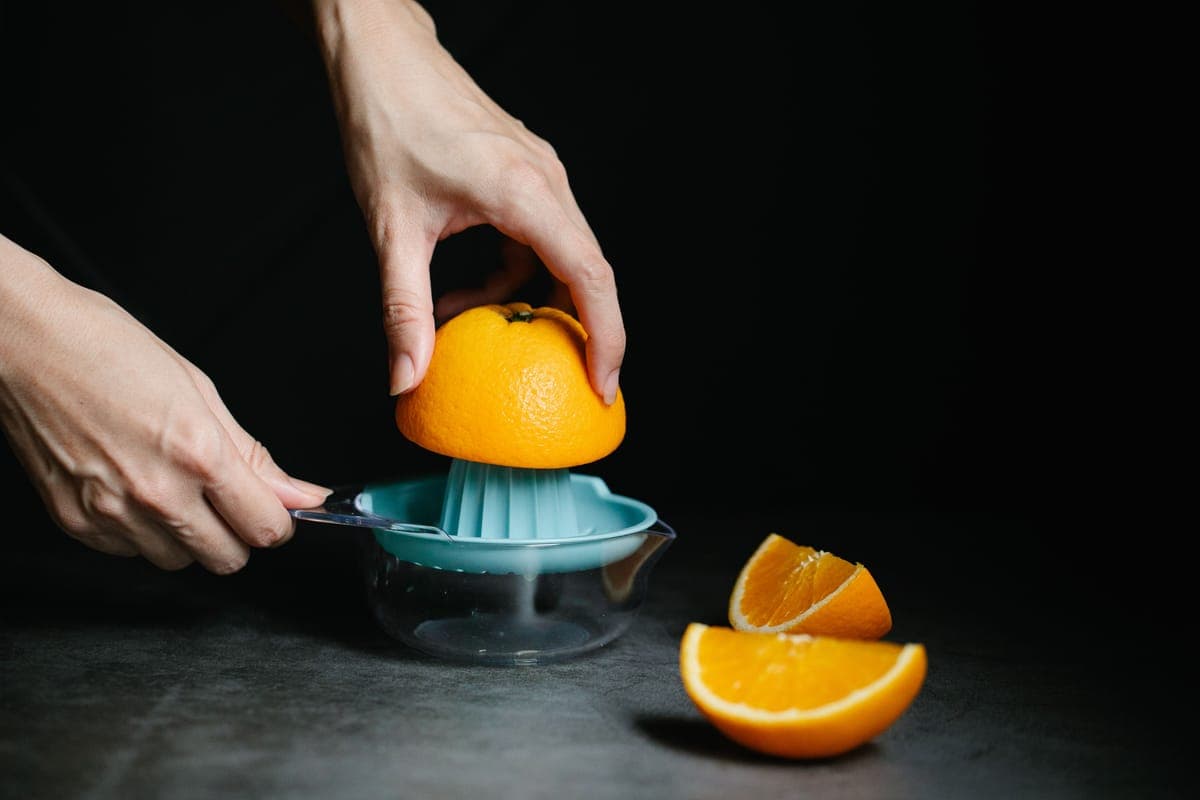 Breville Citrus Press Pro 800CPXL Best pulp control on a citrus press | High-volume citrus, whether that is breakfast for a family or a home bar | 8.2/10 |
Two different questions get asked as one
"Pulp-free" means two unrelated things depending on who is asking, and the machines that answer them are different:
- 1.Pulp in the glass -- the texture of the juice you drink. This is controlled by screen mesh, filter choice and pressure, and it is the question this page answers.
- 2.Pulp in the bin -- how wet the discarded pulp is, which is really a yield question in disguise. A machine that leaves dry pulp extracted more. Juicer yield explained is the page for that one.
They pull in opposite directions, which is why no machine wins both. Press harder and you get more juice and more fine fiber in it; filter finer and you get clearer juice and leave more behind. Juicer pulp explained takes the whole distinction apart; this page is the hardware shortlist.
The published pulp hardware, machine by machine
| Machine | What the maker publishes about pulp | Type of control |
|---|---|---|
| Omega NC900HDC | Five adjustable pressure settings and two juicing screens, per Omega | Two independent controls |
| Ninja NeverClog JC151 | Two pulp filters, for less pulp or more pulp, per Ninja | Swappable filter |
| Cuisinart Pulp Control Citrus Juicer | Three pulp control settings: low, medium and high, per Cuisinart | Dial setting |
| Breville Citrus Press Pro 800CPXL | Adjustable pulp control, per Breville | Adjustable filter |
| Hurom H400 Easy Clean | Claims the least pulp of any Easy Clean model; no comparable figure published | Fixed - architecture, not a setting |
| Omega VSJ843 | Not available - no pulp figure or setting published | Fixed - 43 RPM auger and one screen |
| Chef'n FreshForce | The perforated bowl strains seeds and most pulp, per Chef'n | Fixed - built-in strainer |
| Every centrifugal machine here | Not available | None - the basket mesh is what it is |
The useful pattern in that table: pulp control is a feature you buy, not a quality you get. Four of these six machines let you change the outcome because the maker built a control for it. The other two are fixed, and the premium ones among them are fixed at the fine end.
| Criterion | Hurom H400 Easy Clean | Ninja NeverClog JC151 | Omega NC900HDC | Omega VSJ843 |
|---|---|---|---|---|
| Yield | Hurom claims the highest yield and least pulp of any Easy Clean model; no numeric figure, and no independent verification we could findManufacturer claim: Hurom · checked 2026-10-02 | Not availableNot sourced | Omega markets high juice yield and five pressure settings; no numeric yield figure is publishedManufacturer claim: Omega Juicers · checked 2026-10-02 | Not availableNot sourced |
| Pulp | Hurom claims the least pulp of any Easy Clean model; no comparable figure publishedManufacturer claim: Hurom · checked 2026-10-02 | Ninja states two pulp filters, for less pulp or more pulpManufacturer claim: Ninja · checked 2026-10-02 | Five adjustable pressure settings and two juicing screens, per OmegaManufacturer claim: Omega Juicers · checked 2026-10-02 | Not availableNot sourced |
| Cleanup time | Hurom markets it as Scrub-Free Cleaning; no cleanup time in minutes is publishedManufacturer claim: Hurom · checked 2026-10-02 | Ninja states the removable parts are dishwasher safe; no cleanup time publishedManufacturer claim: Ninja · checked 2026-10-02 | Not available - no published cleanup time in minutesNot sourced | Not available - no published cleanup time in minutesNot sourced |
| Price | $400+Band from retailer listings, checked 2026-10-02 | $100–200Band from retailer listings, checked 2026-10-02 | $200–400Band from retailer listings, checked 2026-10-02 | $400+Band from retailer listings, checked 2026-10-02 |
| Speed | Hurom states 90 RPM, 150 WManufacturer claim: Hurom · checked 2026-10-02 | Ninja states 150 W; no RPM publishedManufacturer claim: Ninja · checked 2026-10-02 | Omega states 80 RPM and 150 W outputManufacturer claim: Omega Juicers · checked 2026-10-02 | Omega states 43 RPM, dual-edge single auger, 150 WManufacturer claim: Omega Juicers · checked 2026-10-02 |
| Warranty | Hurom states a 15-year warranty on motor and partsManufacturer claim: Hurom · checked 2026-10-02 | Ninja states a 1-year limited warranty in the US (2 years in some regions)Manufacturer claim: Ninja · checked 2026-10-02 | Omega states a 15-year limited warrantyManufacturer claim: Omega Juicers · checked 2026-10-02 | Omega states a 15-year limited warrantyManufacturer claim: Omega Juicers · checked 2026-10-02 |
Why centrifugal machines are the wrong place to look
If clear juice is the goal, the spinning machines work against you twice. First, the basket mesh is fixed -- there is no screen to swap and no pressure to adjust, so you get whatever that model gives. Second, and worse, a blade spinning at 12,000 RPM, as Breville states for the JE98XL on high, shreds fiber into particles fine enough to pass straight through the mesh. The juice is cloudier, not clearer.
The visible side effect is foam, which reads to most people as pulp even though it is air. Breville includes a froth separator in the JE98XL carafe for exactly this reason. Juicer foam and oxidation explains what the head on a glass of centrifugal juice actually is.
The free fix that works on any juicer
Before spending anything: a fine-mesh sieve or a nut-milk bag over the jug removes more fine pulp than any setting on any machine on this page. Pour the juice through it, stir once, done. It costs a few dollars, adds thirty seconds, and it is how juice bars get glass-clear juice out of ordinary equipment.
It is worth saying plainly because the search that brings people here is usually a texture complaint about a juicer they already own, and the honest answer in that case is a sieve rather than a new appliance. Buy for pulp control if you are buying anyway. Do not replace a working machine over it.
Which of the six
- Least pulp, money available, no fiddling. Hurom H400.
- You want to change your mind later. Omega NC900HDC -- five pressure settings and two screens.
- Under $200 with real pulp hardware. Ninja NeverClog JC151, for the two filters.
- Clear green juice specifically. Omega VSJ843 at 43 RPM, and see best juicers for leafy greens.
- Pulp-free orange juice. Cuisinart Pulp Control Citrus Juicer, or the Breville 800CPXL for volume. Best citrus juicers is the full field.
- You already own a juicer. A fine sieve, not a new machine.
The picks in full
1. Closest to pulp-free of anything here
Hurom H400 Easy Clean
Hurom H400 · $400+ · Our score 8.0/10
The only machine in this registry whose maker makes a comparative pulp claim at all: Hurom claims the least pulp of any Easy Clean model, at 90 RPM on 150 W, with a 15-year warranty on motor and parts. The mechanism behind it is the Easy Clean architecture itself -- fewer mesh surfaces for fiber to pass through -- and Hurom markets the cleaning as Scrub-Free. Honest cons: that pulp claim is comparative against Hurom's own range and no comparable figure is published, so it cannot be checked against another brand; the 45 mm (1.8 in) chute is narrow, so apples get quartered; and it is $400+.
- Yield
- Hurom claims the highest yield and least pulp of any Easy Clean model; no numeric figure, and no independent verification we could findManufacturer claim: Hurom · checked 2026-10-02
- Pulp
- Hurom claims the least pulp of any Easy Clean model; no comparable figure publishedManufacturer claim: Hurom · checked 2026-10-02
- Cleanup time
- Hurom markets it as Scrub-Free Cleaning; no cleanup time in minutes is publishedManufacturer claim: Hurom · checked 2026-10-02
- Speed
- Hurom states 90 RPM, 150 WManufacturer claim: Hurom · checked 2026-10-02
What works
- No mesh strainer to scrub - the design removes the part people complain about most
- 15 years on motor AND parts, which is rare
- Lighter than most verticals at 14.8 lb, so storing it away is realistic
What does not
- 1.8 in chute means real prep chopping
- The yield and pulp claims are Hurom's own and unverified by any test we could find
- 90 RPM is the fast end of slow juicing
Skip this if: You juice a lot of wheatgrass or very fibrous greens - the wide-gap Easy Clean design trades some fine-strainer extraction for speed at the sink.
Representative photo. We have no manufacturer image library, so this is a licensed stock photo of the category, not a photo of this unit.
- Yield8/10
- Pulp8/10
- Cleanup9/10
- Value6/10
- Quiet8/10
2. Best pulp control under $200
Ninja NeverClog JC151
Ninja JC151 · $100–200 · Our score 7.9/10
The most explicit pulp hardware at the lowest price: Ninja states two pulp filters, for less pulp or more pulp, so the decision is a swap rather than a setting you fight. It also states 150 W and that the removable parts are dishwasher safe, which matters because a fine filter is the part that clogs. Honest cons: Ninja publishes no RPM at all, so it cannot be compared on speed with anything else on this page; the warranty is 1 year in the US (2 years in some regions); and two filters is two parts to store and keep clean.
- Yield
- Not availableNot sourced
- Pulp
- Ninja states two pulp filters, for less pulp or more pulpManufacturer claim: Ninja · checked 2026-10-02
- Cleanup time
- Ninja states the removable parts are dishwasher safe; no cleanup time publishedManufacturer claim: Ninja · checked 2026-10-02
- Speed
- Ninja states 150 W; no RPM publishedManufacturer claim: Ninja · checked 2026-10-02
What works
- Genuine pulp choice: two filters, not a marketing claim
- Dishwasher-safe removable parts
- Widely stocked at the big retailers, so it is easy to find and easy to return
What does not
- 1-year US warranty
- Ninja publishes no RPM, so it cannot be compared on speed
- 24-30 oz jug means emptying on bigger batches
Skip this if: You want a long warranty. Ninja covers this for one year in the US, against 15 on the premium verticals.
Representative photo. We have no manufacturer image library, so this is a licensed stock photo of the category, not a photo of this unit.
- Yield7/10
- Pulp9/10
- Cleanup8/10
- Value8/10
- Quiet7/10
3. Most adjustable pulp control
Omega NC900HDC
Omega NC900HDC · $200–400 · Our score 7.9/10
The only machine here with two independent controls over what reaches the glass: Omega states five adjustable end-cap pressure settings and two juicing screens, at 80 RPM on 150 W, with a 15-year limited warranty. Fine screen plus high pressure gives the clearest juice this site can point to; coarse screen plus low pressure gives a heavier glass on purpose. Honest cons: it is 19.22 in wide at 18.7 lb with the most parts to wash of any auger here; the chute is narrow; and Omega publishes no pulp figure, only the hardware description.
- Yield
- Omega markets high juice yield and five pressure settings; no numeric yield figure is publishedManufacturer claim: Omega Juicers · checked 2026-10-02
- Pulp
- Five adjustable pressure settings and two juicing screens, per OmegaManufacturer claim: Omega Juicers · checked 2026-10-02
- Cleanup time
- Not available - no published cleanup time in minutesNot sourced
- Speed
- Omega states 80 RPM and 150 W outputManufacturer claim: Omega Juicers · checked 2026-10-02
What works
- Five pressure settings give real control over pulp and extraction
- Handles wheatgrass, which most verticals do poorly
- 15-year warranty on a design that has been iterated for years
What does not
- 19.22 in wide, which is a counter-depth problem in small kitchens
- More parts to wash than any vertical here
- 18.7 lb, so it lives out on the counter whether you like it or not
Skip this if: Your counter is shallow, or cleanup is what will make you quit. It is over 19 in wide and there are more parts to wash than on any vertical here.
Representative photo. We have no manufacturer image library, so this is a licensed stock photo of the category, not a photo of this unit.
- Yield9/10
- Pulp9/10
- Cleanup6/10
- Value8/10
- Quiet8/10
4. Best for clear green juice
Omega VSJ843
Omega VSJ843 · $400+ · Our score 8.0/10
Pulp in green juice is a different problem from pulp in fruit juice -- it is fine suspended fiber rather than lumps -- and the fix is slow, even crushing. Omega states 43 RPM, the slowest in this registry, with a dual-edge single auger on 150 W and a 15-year limited warranty. Slower crushing means less fiber shredded fine enough to pass the screen. Honest cons: Omega publishes no pulp figure for it, so the reasoning above is mechanical rather than measured; it is $400+; and hard roots are not what it is built for.
- Yield
- Not availableNot sourced
- Pulp
- Not availableNot sourced
- Cleanup time
- Not available - no published cleanup time in minutesNot sourced
- Speed
- Omega states 43 RPM, dual-edge single auger, 150 WManufacturer claim: Omega Juicers · checked 2026-10-02
What works
- Slowest published speed here at 43 RPM
- Juice tap lets you mix in the bowl and stops the drip
- 15-year limited warranty
What does not
- Narrow feed opening - prep is unavoidable
- Slow by design, so throughput is low
- No published yield, pulp or cleanup figure
Skip this if: You want speed in the morning. 43 RPM is deliberate and it feels deliberate when you are late for work.
Representative photo. We have no manufacturer image library, so this is a licensed stock photo of the category, not a photo of this unit.
- Yield9/10
- Pulp9/10
- Cleanup7/10
- Value6/10
- Quiet9/10
5. Best pulp control for citrus
Cuisinart Pulp Control Citrus Juicer
Cuisinart CCJ-500 · Under $100 · Our score 8.3/10
Orange juice is where pulp preferences are strongest and most specific, and this is the cheapest machine on the site that settles the argument: Cuisinart states three pulp control settings -- low, medium and high -- plus a limited 3-year warranty, which is triple Breville's on a machine a fraction of the price. Honest cons: it does citrus and nothing else; Cuisinart publishes no wattage or RPM for this model, so there is nothing to compare on power; and a reamer leaves more pith fragments than a lever press does.
- Yield
- Not availableNot sourced
- Pulp
- Cuisinart states three pulp control settings: low, medium and highManufacturer claim: Cuisinart · checked 2026-10-02
- Cleanup time
- Not available - no published cleanup time in minutesNot sourced
- Speed
- Not available - Cuisinart publishes no wattage or RPM for this modelNot sourced
What works
- Three pulp settings at a budget price
- The auto-reversing cone handles small limes and large grapefruit
- 3-year warranty
What does not
- Citrus only
- Cuisinart publishes no power figure
- 8 oz working capacity means pouring off as you go
Skip this if: You want one juicer for everything. This does citrus and nothing else.
Representative photo. We have no manufacturer image library, so this is a licensed stock photo of the category, not a photo of this unit.
- Yield8/10
- Pulp9/10
- Cleanup8/10
- Value9/10
- Quiet7/10
6. Best pulp control on a citrus press
Breville Citrus Press Pro 800CPXL
Breville 800CPXL · $200–400 · Our score 8.2/10
The press version of the same job, for volume. Breville states adjustable pulp control on a die-cast stainless powered lever arm at 110 W, with the cone, juice collector, filter and fruit dome all dishwasher safe -- and the filter is the whole pulp story on a press, so being able to wash it properly matters. Honest cons: citrus only; 10.6 lb of permanent counter fixture; a 1-year limited warranty; and for two lemons a week it is an expensive way to avoid pith.
- Yield
- Breville states the Quadra-Fin acid-resistant cone maximizes extraction; no numeric figure publishedManufacturer claim: Breville · checked 2026-10-02
- Pulp
- Breville states adjustable pulp controlManufacturer claim: Breville · checked 2026-10-02
- Cleanup time
- Breville states the juicing cone, juice collector, filter and fruit dome are dishwasher safeManufacturer claim: Breville · checked 2026-10-02
- Speed
- Breville states 110 WManufacturer claim: Breville · checked 2026-10-02
What works
- The powered lever does the work, so no hand strength is needed
- Adjustable pulp control, which most citrus juicers lack
- Four parts, all dishwasher safe
What does not
- Expensive and heavy for a single-purpose tool
- 1-year warranty
- Citrus only - it will not touch a stalk of celery
Skip this if: You juice two lemons a week. A 10.6 lb die-cast press is absurd for that, and a hand squeezer is not.
Representative photo. We have no manufacturer image library, so this is a licensed stock photo of the category, not a photo of this unit.
- Yield9/10
- Pulp9/10
- Cleanup8/10
- Value6/10
- Quiet7/10
Questions people ask
Is there a juicer that leaves no pulp?
What is the best pulp-free juicer?
Do masticating juicers make less pulpy juice than centrifugal ones?
How do you get pulp out of fresh juice?
Which juicer is best for pulp-free orange juice?
Does less pulp mean less yield?
Sources
Every figure on this page traces to one of these. Where a source does not publish a number, the page says “Not available” rather than estimating one.
- Hurom H400 Easy Clean — Least-pulp claim across Hurom's Easy Clean range, Scrub-Free Cleaning, 90 RPM, 150 W, 45 mm chute, 15-year warranty
- Ninja NeverClog JC151 — Two pulp filters for less or more pulp, 150 W, dishwasher-safe removable parts, 1-year US limited warranty
- Omega NC900HDC — Five adjustable pressure settings, two juicing screens, 80 RPM, 150 W, 15-year limited warranty
- Omega VSJ843 — 43 RPM, dual-edge single auger, 150 W, 15-year limited warranty
- Cuisinart Pulp Control Citrus Juicer CCJ-500 — Three pulp control settings (low, medium, high), limited 3-year warranty; no wattage or RPM published
- Breville Citrus Press Pro 800CPXL — Adjustable pulp control, die-cast powered lever, 110 W, four dishwasher-safe parts, 1-year warranty
- Chef'n FreshForce Citrus Juicer — Perforated bowl strains seeds and most pulp; top-rack dishwasher safe
Read next
Juicer Pulp, Explained
The difference between pulp in your juice and pulp dryness in the bin, and which machines control each.
Juicers That Keep the Pulp
The honest answer on pulp: no juicer keeps all of it, three machines let you choose how much, and sometimes a blender is what you actually want.
Juicer Yield, Explained
Why juicer yield figures do not exist, where the circulating numbers come from, and how to measure your own.
What to Do With Juicer Pulp
An honest guide to juicer pulp: which types are worth keeping, which are not, and realistic uses.