Twin Gear vs Masticating Juicer
The genuine mechanical division inside cold press juicing. Also the one where the better machine is usually the wrong buy.
By Brijon M. · Last reviewed October 2, 2026
We earn a commission if you buy through links on this page, at no extra cost to you. It does not change what we recommend or the order we rank things in. Full disclosure.
Twin gear extracts more thoroughly. A single auger is the machine you will actually keep using. That is not a cop-out -- it is the honest shape of this comparison, and it is why we recommend single auger machines to almost everybody while acknowledging that twin gear is mechanically superior.
The mechanical difference
A single auger machine crushes produce against a perforated screen. Pressure comes from one side, and from the taper of the screw progressively reducing the available space. Our registry runs 43 to 90 RPM for these.
A twin gear machine has no screen in the usual sense. Two stainless gears mesh together with a very small gap and produce is crushed and sheared between them. Tribest states 110 RPM for the Greenstar series -- faster than most single-auger verticals, and still two orders of magnitude slower than centrifugal.
Pressure from both sides at once, through a tight gap, is a more complete extraction than pressure from one side against a screen. That is a mechanical argument and it is sound.
| Criterion | Tribest Greenstar Pro | Omega NC900HDC | Omega VSJ843 | Hurom H400 Easy Clean |
|---|---|---|---|---|
| Yield | Not availableNot sourced | Omega markets high juice yield and five pressure settings; no numeric yield figure is publishedManufacturer claim: Omega Juicers · checked 2026-10-02 | Not availableNot sourced | Hurom claims the highest yield and least pulp of any Easy Clean model; no numeric figure, and no independent verification we could findManufacturer claim: Hurom · checked 2026-10-02 |
| Pulp | Not availableNot sourced | Five adjustable pressure settings and two juicing screens, per OmegaManufacturer claim: Omega Juicers · checked 2026-10-02 | Not availableNot sourced | Hurom claims the least pulp of any Easy Clean model; no comparable figure publishedManufacturer claim: Hurom · checked 2026-10-02 |
| Cleanup time | Not available - no published cleanup time in minutesNot sourced | Not available - no published cleanup time in minutesNot sourced | Not available - no published cleanup time in minutesNot sourced | Hurom markets it as Scrub-Free Cleaning; no cleanup time in minutes is publishedManufacturer claim: Hurom · checked 2026-10-02 |
| Price | $400+Band from retailer listings, checked 2026-10-02 | $200–400Band from retailer listings, checked 2026-10-02 | $400+Band from retailer listings, checked 2026-10-02 | $400+Band from retailer listings, checked 2026-10-02 |
| Speed | Tribest states 110 RPM, 200 WManufacturer claim: Tribest · checked 2026-10-02 | Omega states 80 RPM and 150 W outputManufacturer claim: Omega Juicers · checked 2026-10-02 | Omega states 43 RPM, dual-edge single auger, 150 WManufacturer claim: Omega Juicers · checked 2026-10-02 | Hurom states 90 RPM, 150 WManufacturer claim: Hurom · checked 2026-10-02 |
| Warranty | Tribest states 12 years for household useManufacturer claim: Tribest · checked 2026-10-02 | Omega states a 15-year limited warrantyManufacturer claim: Omega Juicers · checked 2026-10-02 | Omega states a 15-year limited warrantyManufacturer claim: Omega Juicers · checked 2026-10-02 | Hurom states a 15-year warranty on motor and partsManufacturer claim: Hurom · checked 2026-10-02 |
What twin gear costs, in Tribest's own numbers
| Tribest Greenstar Pro (twin gear) | Omega NC900HDC (single auger) | |
|---|---|---|
| Speed | 110 RPM | 80 RPM |
| Chute | 1.5 in | Narrow, not published as a figure |
| Weight | 27 lb | 18.7 lb |
| Width | 18.6 in | 19.22 in |
| Warranty | 12 years household | 15 years limited |
| Adjustment | None published | Five end-cap pressure settings |
| Cleanup | Gear teeth - the hardest geometry in home juicing | Heavy, but a conventional screen |
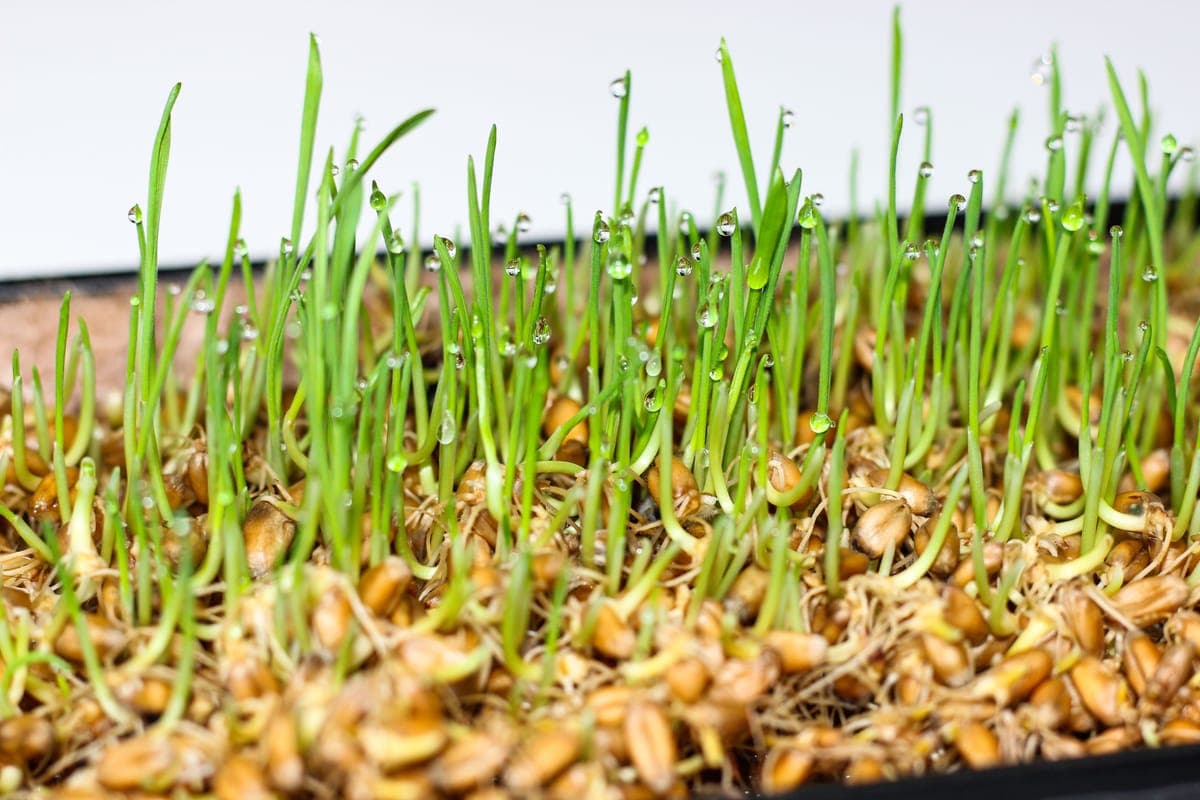
The cleanup row is the decisive one. Gear teeth hold fiber in a way a smooth screen does not, and the supplied brush is the only practical way in. With wheatgrass -- which is exactly what people buy twin gear for -- fine fiber gets into every tooth.
Choose twin gear if
- You juice wheatgrass or very hard greens daily and have found single-auger machines leave too much behind.
- You juice in volume, where incremental extraction compounds into real produce savings.
- You already own a cold press machine, know exactly what frustrates you about it, and are deliberately trading convenience for extraction.
- Cleanup genuinely does not bother you. Be honest with yourself about this one.
Choose single auger if
- This is your first juicer. Without exception. A 27 lb machine with a 1.5 in chute is not where anybody should start.
- You want adjustable extraction. Omega's five pressure settings are a documented control that twin gear does not offer.
- Counter space or weight is a constraint. 27 lb lives where you put it, permanently.
- You want one machine for mixed produce. Single auger handles greens, hard produce, soft produce and peeled citrus with far less ceremony.
The honest recommendation
For nearly everybody, Omega's NC900HDC is the better purchase than a twin gear machine. It is a horizontal single auger with five adjustable pressure settings and a 15-year warranty, it handles wheatgrass, and it does not demand that you clean gear teeth every morning.
Twin gear is the right machine for a small number of people who know precisely why they want it. If you are not sure whether you are one of them, you are not. Twin gear juicers and horizontal masticating juicers cover each category in full.
Parts, and what that means in practice
The cleanup difference is a parts-geometry difference, and it is worth seeing it concretely rather than as a vague warning. A single-auger vertical has a drum, a screen, an auger and a lid: four pieces, all smooth or uniformly perforated, all of which rinse under a tap in seconds while the pulp is still wet.
A twin gear machine has two meshing stainless gears plus a housing, screens and an outlet. Gear teeth are the hardest geometry in home juicing to clear, because fiber lodges between them and the only practical tool is the supplied brush. With wheatgrass -- which is exactly what the machine is bought for -- the fiber is fine enough to get into every tooth.
That is why we put a single-auger machine ahead of a mechanically superior one for almost every buyer. The best machine is the one that is still being used in month six.
Questions people ask
Is a twin gear juicer better than a masticating one?
How much more juice does twin gear produce?
Are twin gear juicers hard to clean?
Should my first juicer be twin gear?
What is the best alternative to a twin gear juicer?
How many more parts does a twin gear juicer have?
Sources
Every figure on this page traces to one of these. Where a source does not publish a number, the page says “Not available” rather than estimating one.
- Tribest Greenstar Elite — 110 RPM twin gear, 1.5 in chute, 27 lb, 18.6 in wide, 12-year household warranty
- Omega NC900HDC specifications — 80 RPM, five pressure settings, 18.7 lb, 19.22 in wide, 15-year warranty
Read next
Juicer Comparisons
Type-against-type and model-against-model comparisons, all decided on the same four criteria.
Twin Gear Juicers
The twin gear category: what trituration actually is, and the narrow set of people it suits.
The Best Horizontal Masticating Juicers
Horizontal augers: adjustable extraction and wheatgrass, in exchange for serious counter depth.
The Highest-Yield Juicers
Yield ranked by mechanism and documented features, with a plain account of why no comparable figures exist.
Tribest Greenstar Pro Review
The twin gear specialist: most thorough extraction available, hardest machine on the site to live with.